

Key Takeaways
- Seasonal produce is cheaper because supply is higher, not because it is a special deal.
- Your cooking structure can stay fixed while only the specific vegetables and fruits rotate.
- A handful of flexible recipes handles most of what the produce section offers in any month.
- Freezing or batch-cooking peak-season produce extends its value well past harvest.
- Cutting food waste is as important as buying cheap produce for family budget savings.
Why seasonal produce matters for your grocery budget
Prices on fresh produce drop when local supply is high and transportation costs fall. A pound of zucchini in July costs a fraction of what it costs in February, because in July the supply chain is short and straightforward. This is not a sale or a promotion; it is how commodity pricing works for perishable food.
For families watching grocery spending, that price gap is worth paying attention to. The difference between in-season and out-of-season prices on a given vegetable can be 30 to 60 percent depending on the item and the region. If your weekly meals lean on whatever is cheapest at that moment, that adds up over a year without requiring any special planning system.
See how other families lock in savings through routine in our weekly meal planning framework.
Check prices before writing your meal plan
Look at your store's produce section or weekly circular before deciding what to cook. Letting the cheapest fresh produce drive your meal choices, rather than a fixed list, is the core habit that seasonal cooking depends on. This approach requires a flexible recipe repertoire but not a large one.
What actually changes with the seasons
The specific produce available and its price are what change. Flavor and texture shift too: a tomato picked ripe in August is different from a tomato picked green in November and shipped across the country. That difference is not snobbery; it affects how the finished dish tastes and how much seasoning it needs.
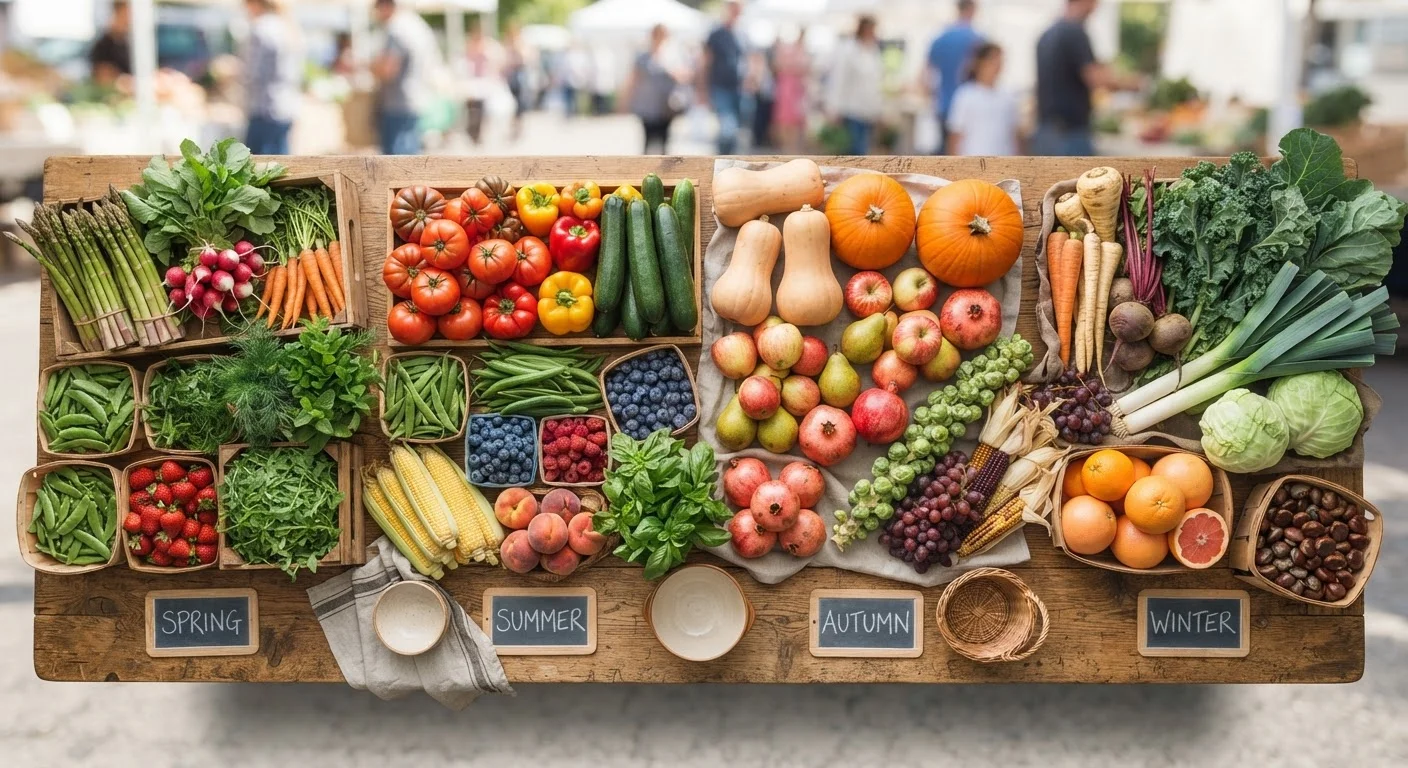
Here is a rough guide to what tends to be plentiful and affordable by season in most U.S. regions:
- Spring: asparagus, peas, radishes, spinach, strawberries
- Summer: corn, cucumbers, green beans, tomatoes, zucchini, peaches, berries
- Fall: butternut squash, sweet potatoes, apples, Brussels sprouts, cauliflower
- Winter: cabbage, carrots, citrus, kale, parsnips, turnips
Regional variation is real. What peaks in California in May may not peak in Minnesota until July. Checking what is actually priced low at your store each week is more reliable than following a generic seasonal chart.
~50%
Typical price premium for out-of-season produce
USDA Economic Research Service data consistently shows significant price gaps between in-season and off-season fresh produce across most vegetables and fruits.
30%+
Share of food purchased by U.S. households that goes uneaten
The USDA estimates that roughly 30 to 40 percent of the food supply in the United States is lost or wasted, with a large share occurring at the household level.
What stays the same all year
Your cooking methods, pantry staples, and meal structure do not need to change. A stir-fry is a stir-fry whether the vegetable is snow peas in April or bell peppers in August. A soup works with butternut squash in October and with asparagus and leeks in May. The technique, the protein, the grains, and the seasonings stay constant; the vegetable rotates.
This is the mental shift that makes seasonal cooking practical for busy families: stop planning around specific vegetables and start planning around cooking formats. A few reliable formats handle most of what comes through the produce section across the whole year.
- Sheet pan meals: protein plus any firm vegetable, roasted together. See our guide to sheet pan dinners for the basics.
- Grain bowls: cooked grain base, any sauteed or roasted vegetable, a simple sauce.
- Soups and stews: aromatics, broth, protein, whatever vegetable is cheap and fresh.
- Frittatas and egg dishes: eggs stretch any combination of vegetables into a full meal.
Pantry items like canned tomatoes, dried beans, grains, olive oil, and spices stay constant and fill the gaps when the fresh vegetable of the week does not carry the whole dish on its own.
Building a flexible meal planning routine
A flexible meal plan has a fixed structure and variable ingredients. Each week, plan for roughly the same meal formats: two or three dinners from the sheet pan or stir-fry template, one soup or stew, one egg-based meal, one batch-cooked grain dish. Then fill those templates with whatever produce is cheapest that week.
The planning step that most families skip is checking produce prices before writing the meal list, not after. If you write the meal list first and then go shopping, you are locked into specific ingredients. If you note what is cheap first, the meal list almost writes itself.
Our batch cooking guide covers how to prep larger quantities of these flexible dishes so weeknights take less time.
Scan the produce section first, then open your notes app and write the week's dinners. Five minutes of price-checking before planning saves more than any coupon app.
Locking in cheap produce before writing the meal list removes the friction of mid-week substitutions and prevents overspending on out-of-season items.
Keep a short list of your family's favorite sauces and seasonings. When the vegetable changes week to week, familiar sauces make the new ingredient feel like a known quantity to picky eaters.
Flavor consistency reduces meal rejection, which is one of the main reasons families abandon flexible meal planning and fall back on a narrow list of fixed recipes.
Preserving the season when prices are low
When a vegetable or fruit is at peak availability, prices drop sharply and quality is high. That is the moment to buy more than you need for the week and preserve the surplus. Freezing is the most practical method for most families.
Most vegetables freeze well after a quick blanch (dipping in boiling water for one to three minutes, then cooling in ice water). This stops the enzymes that cause texture and color loss during storage. Corn, green beans, peas, broccoli, and most leafy greens all freeze well this way. Tomatoes can go straight into a freezer bag without blanching for use in cooked dishes later.
For a longer list of what freezes without quality loss, our freezer-friendly meal guide covers both produce and full prepared dishes. Reducing what goes to waste before it reaches the freezer matters just as much; our kitchen waste audit walks through where family food budgets typically leak.
Practical swaps across the four seasons
The table below shows how one recipe category can use different produce across the year without changing the core dish:
| Meal format | Spring | Summer | Fall | Winter |
|---|---|---|---|---|
| Sheet pan | Asparagus, radishes | Zucchini, corn | Sweet potato, Brussels sprouts | Carrots, parsnips |
| Soup or stew | Pea and leek | Tomato and bean | Butternut squash | Cabbage and white bean |
| Grain bowl | Spinach, soft egg | Grilled corn, cucumber | Roasted cauliflower | Kale, citrus vinaigrette |
| Egg dish | Asparagus frittata | Zucchini and tomato | Squash and kale | Cabbage hash |
These are starting points. The actual swap depends on what your store has marked down that week. The habit of scanning produce prices first and building the meal around them, rather than the reverse, is what makes seasonal eating work on a real family schedule.
For families who want to take the same flexible approach to meat costs, our guide on stretching ground beef with vegetables and grains shows how the same logic applies to protein.