

Key Takeaways
- Sheet pan dinners combine protein and vegetables into a single oven-roasted meal on one tray.
- Most recipes require 10 minutes or less of active prep time before going into the oven.
- Choosing affordable, seasonal vegetables keeps ingredient costs low without reducing nutrition.
- Proper spacing on the pan is the single biggest factor in whether food roasts or steams.
- Leftovers from sheet pan meals reheat well and can reduce next-day food waste.
Sheet pan dinner
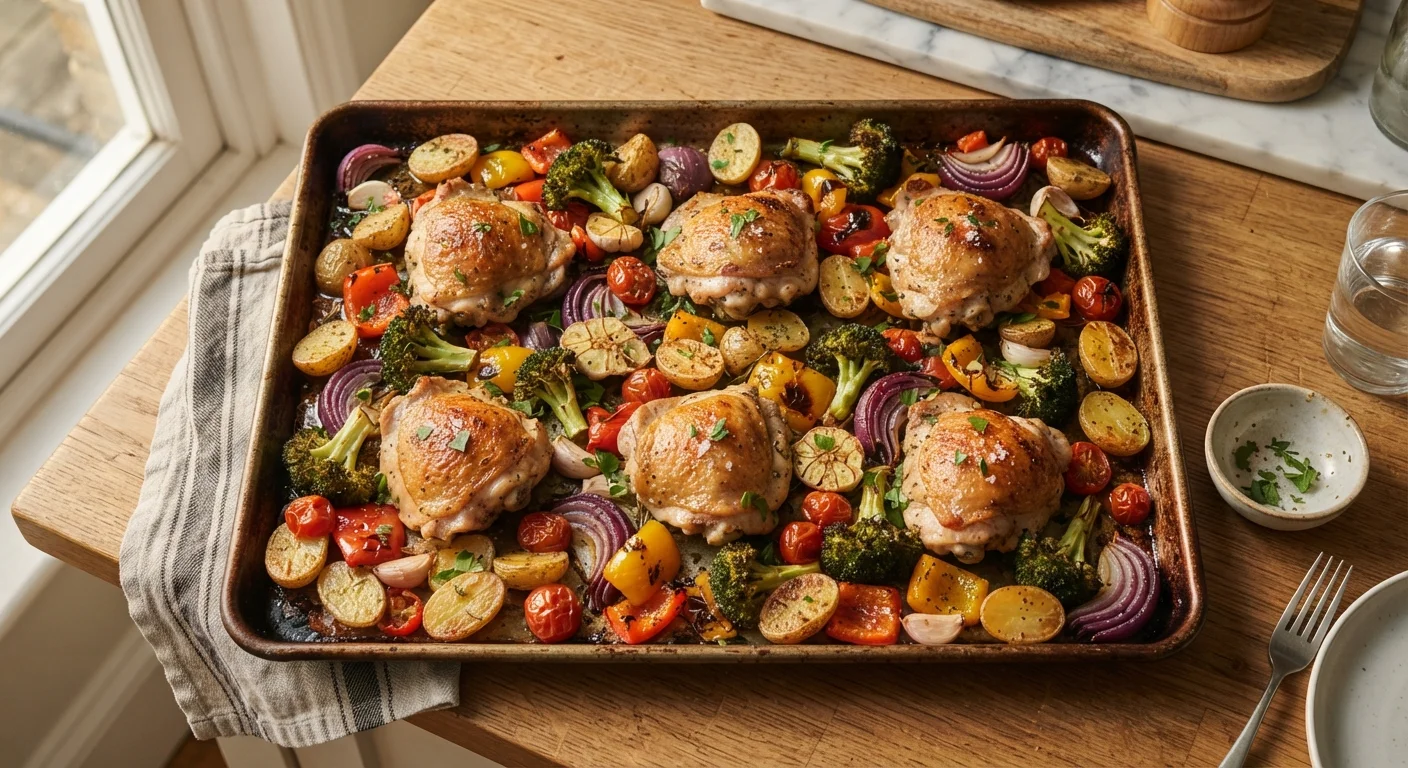
A sheet pan dinner is a meal where protein and vegetables are arranged on a single rimmed baking sheet and roasted together in the oven. Everything cooks at once, usually in 25 to 40 minutes, with no separate pots or multiple burners. The result is a complete, hot meal with only one pan to wash.
The rimmed baking sheet (sometimes called a half-sheet or jelly roll pan) allows air to circulate around food while containing drippings, which promotes browning through the Maillard reaction rather than steaming.
What makes a sheet pan dinner work
The concept is simple: season your protein and vegetables, spread them on one rimmed pan, and roast. Heat circulates around the food and the pan surface conducts it from below, browning and crisping the exterior while the interior cooks through. That combination of dry heat and direct contact is what makes roasted food taste better than boiled or steamed.
A few structural choices determine whether the meal turns out well. First, matching cook times matters. A chicken thigh needs more time in the oven than asparagus spears, so you either start the chicken first and add vegetables partway through, or you cut dense items smaller so they finish at the same rate as quicker-cooking ones. Second, spacing on the pan matters at least as much as seasoning. Pieces touching each other trap moisture and steam rather than roast; a half inch of space between items is enough to make a clear difference in texture. Third, fat is necessary. A tablespoon or two of oil per pound of food coats surfaces and helps with browning while preventing sticking.
Pat everything dry before seasoning
Surface moisture is the main enemy of browning. Before adding oil and seasoning, pat chicken pieces and vegetables with a paper towel. Even a brief rest on the counter after patting dry, while the oven preheats, improves the final texture.
Beyond those basics, the method is forgiving. It works with chicken legs, pork tenderloin, shrimp, tofu, sausage, and most fish fillets. On the vegetable side, root vegetables, brassicas like broccoli and cauliflower, bell peppers, onions, and zucchini all perform well. Choosing vegetables by season keeps the grocery cost lower and the flavor better.
Keeping costs down with this method
Sheet pan cooking suits budget meal planning because it works well with inexpensive cuts. Bone-in chicken thighs and drumsticks, pork shoulder steaks, and sausage links roast better than lean, expensive cuts, which can dry out under high heat. Cheaper cuts tend to have more fat and connective tissue, which keeps them moist during a 35-minute roast.
Vegetables follow the same logic. Potatoes, sweet potatoes, cabbage wedges, carrots, and beets cost far less than asparagus or cherry tomatoes. Mixing one or two lower-cost vegetables with whatever is on sale that week is a straightforward way to build variety without adding much to the bill. If you are already working from a weekly grocery plan, sheet pan meals slot in easily. See how a weekly meal plan keeps spending predictable for a framework that pairs well with this approach.
40%
Average food waste in American households
The U.S. Department of Agriculture estimates that roughly 30 to 40 percent of the food supply in the United States is wasted, much of it at the consumer level.
30 min
Typical active cook time saved vs. multi-pan meals
Home cooks report spending significantly less time at the stove when using single-pan methods compared to meals requiring multiple pots and coordination between burners.
Leftovers are another cost factor. A sheet pan of chicken thighs and root vegetables for four people typically produces enough for a next-day lunch or a quick grain bowl. That directly reduces food waste, which is one of the quieter budget drains in most households. A kitchen waste audit can help identify how much your household already loses before food reaches the table.
How sheet pan cooking compares to other weeknight methods
Sheet pan dinners are not the only efficient weeknight strategy. Batch cooking produces larger quantities you can draw from across the week, which takes more upfront time but less daily effort. Freezer meals go further in time, letting you bank cooked food for weeks ahead. Sheet pan cooking sits in a different position: it is a same-night method, fast from prep to plate, with ingredients bought that day or earlier in the week.
The tradeoff is that sheet pan meals do not scale as easily as batch cooking. Two pans for a larger family work fine, but coordination between pans adds a small amount of mental overhead. For families juggling multiple schedules, having two or three reliable sheet pan combinations memorized is often more practical than planning elaborate menus. A rotation of four or five protein-and-vegetable pairings, each with minor seasonal variation, covers most weeknights without requiring new decisions every day.
On cleanup, the method delivers what it promises. One pan, a cutting board, and a knife cover almost all the prep and cooking. Lining the pan with foil cuts washing time further. For families where the barrier to cooking at home is cleanup rather than cooking skill, that reduction is real and repeatable.