

Key Takeaways
- Soups, braises, and casseroles generally freeze and reheat better than delicate pasta or egg-based dishes.
- Portion food before freezing so you only thaw exactly what your family needs on a given night.
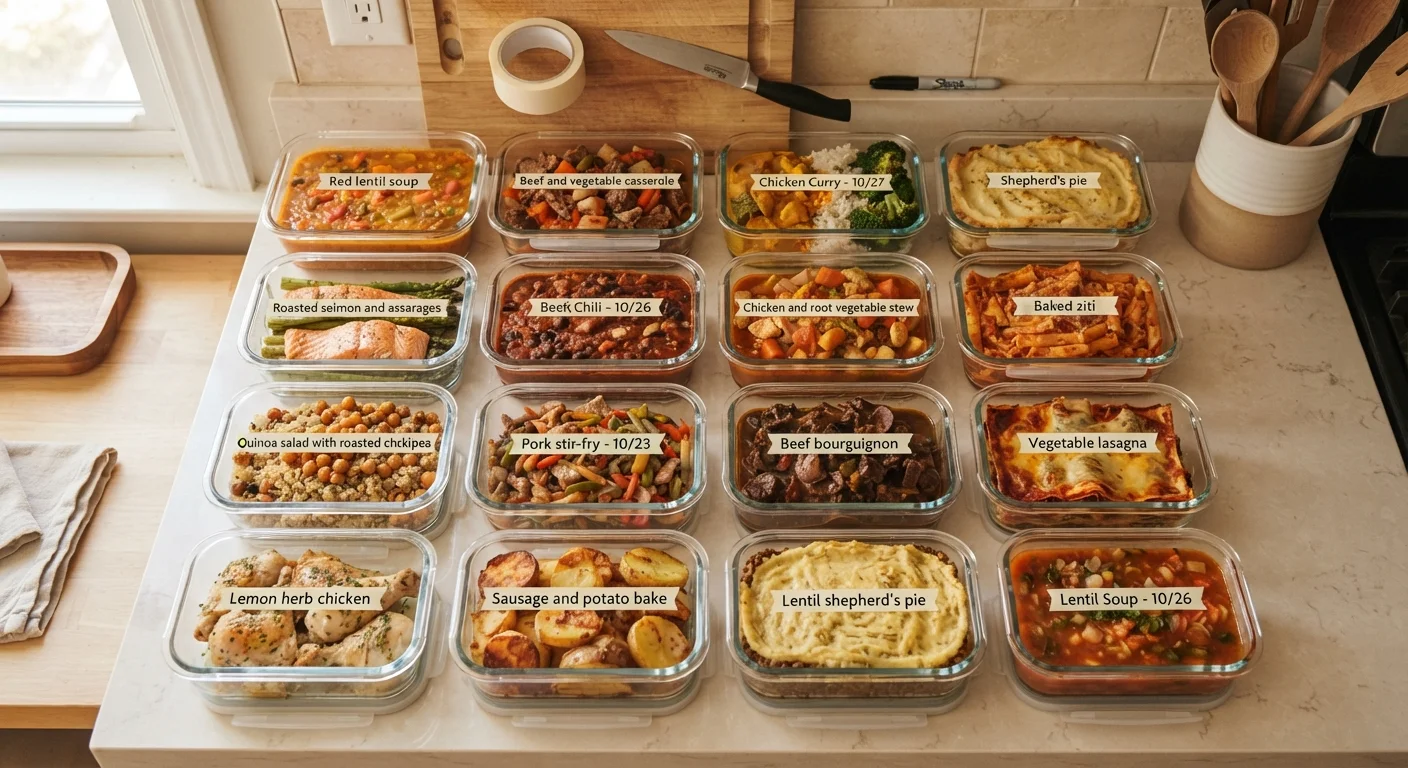
- Labeling containers with the date and reheating instructions saves time and reduces waste.
- One focused cooking session on the weekend can cover several weeknight dinners for a family of four.
- Freezer meals cut last-minute takeout spending by giving families a ready alternative on busy nights.
Why a freezer-stocked weekend pays off all week
The gap between a hectic Tuesday and a calm one often comes down to what is already in the freezer. When dinner is 20 minutes away instead of an hour, the temptation to order takeout shrinks considerably. That translates directly to lower food spending without forcing anyone to eat something they do not enjoy.
Freezer cooking works best when you match the food to what actually freezes well. Fat-based sauces, beans, braised meats, and dense soups survive freezing with almost no quality loss. Dairy-heavy cream sauces, raw potatoes, and cooked pasta with sauce baked in can turn grainy or watery, so those are worth avoiding when you are cooking specifically to freeze.
If you are new to the practice, the batch cooking starting guide covers how to plan quantities, store safely, and reheat without drying food out. The list below focuses on specific meals that hold up reliably. Use it as a weekend starting point rather than a rigid plan.
Slow-cooked beef and bean chili
Chili is one of the most freezer-tolerant foods you can make. Beans and braised ground beef both survive freezing intact, and the flavor tends to deepen slightly after a freeze-thaw cycle. Cook a large pot on Saturday, cool it completely, then portion into quart-sized containers. Each container feeds two adults or two adults and a young child with a side of rice or cornbread.
Use dried beans if time allows. They cost a fraction of canned and produce a better texture after freezing. A three-pound batch of ground beef paired with two cups of dried beans makes roughly eight to ten servings for well under what a single takeout order would cost.
Chili's flavor often improves after a freeze-thaw cycle, making it a smarter cook-ahead choice.
Chicken and vegetable soup
Bone-in chicken pieces cost less per pound than boneless and produce a richer broth when simmered. Cook the chicken in a large pot with aromatics, shred the meat, then add vegetables. Leave pasta or rice out when freezing. Add those fresh when reheating so they do not turn mushy.
A whole chicken or a package of bone-in thighs typically yields enough meat and broth for three separate soup servings when stretched with vegetables. Freeze broth and solids together to maintain moisture during reheating.
Leave pasta or rice out of soup before freezing and add them fresh when reheating.
Lentil and tomato stew
Lentils are one of the least expensive proteins available at most grocery stores and they freeze exceptionally well. A stew built on red or green lentils with canned tomatoes, onion, garlic, and basic spices costs very little per serving and reheats in minutes on the stovetop or in a microwave.
Red lentils break down into a thicker, creamier texture that some families prefer for younger children. Green or brown lentils hold their shape better, which works well if your household prefers a chunkier consistency. Both options work equally well from the freezer.
Lentils are among the least expensive proteins available and freeze with almost no quality loss.
Pulled pork or shredded chicken
Cooked, shredded meat is one of the most versatile things you can keep in a freezer. Pulled pork from a pork shoulder, or chicken thighs braised in broth, can become tacos, sandwiches, rice bowls, or a quick pasta topping depending on what else you have on hand.
Freeze shredded meat in two-cup portions with a small amount of cooking liquid to prevent it from drying out. Pork shoulder is typically one of the more affordable cuts at most stores, and a four-pound shoulder yields enough for several separate meals.
Freeze shredded meat with a splash of cooking liquid so it reheats moist rather than dry.
Vegetable and bean enchilada casserole
Casseroles assembled with corn tortillas rather than flour hold up better in the freezer because corn tortillas do not absorb liquid as aggressively during reheating. A filling of black beans, roasted peppers, corn, and a tomato-based sauce can be layered in a baking dish, covered tightly, and frozen before or after baking.
Freeze before baking if possible. Baking from a thawed state gives you a fresher result than reheating a fully cooked casserole. Add shredded cheese on top in the last ten minutes of baking so it melts fresh rather than drying out.
Corn tortilla casseroles freeze better than flour tortilla versions and reheat with less sogginess.
White bean and ham soup
A ham hock or leftover ham bone simmered with dried white beans, onion, celery, and carrots makes a filling, protein-rich soup that costs very little per serving. The collagen from the ham bone dissolves during cooking and gives the broth a silkier texture that holds up well after freezing.
If you do not have a ham bone, a small amount of diced smoked ham mixed into the beans delivers similar flavor at a lower cost than many other proteins. This soup freezes well in individual or family-sized portions and reheats on the stovetop without any noticeable drop in quality.
Simmering dried beans with a ham bone produces one of the most cost-effective soups you can freeze.
Putting it all together on a budget
The meals above share a few things: inexpensive base ingredients, flexible serving sizes, and reheating that takes less time than driving anywhere. Most work well alongside whatever vegetables are in season, which keeps grocery costs down across the year. The seasonal produce guide explains how to build that kind of flexibility into a regular shopping routine.
Label everything before it goes in
Write the meal name, date frozen, and a quick reheating note directly on each container or freezer bag. Most soups and stews keep well for two to three months in a standard home freezer. Without labels, containers become a guessing game and food often gets forgotten until it is past its quality window.
For a full picture of weekly spending, pair this approach with a structured meal plan that accounts for all seven dinners. And if food waste is quietly eating into your budget, the kitchen waste audit can help you spot where money is actually disappearing.