

Key Takeaways
- A family of four can eat nutritious meals for around $100 per week with consistent planning.
- Building meals around pantry staples and a rotating protein list keeps costs stable.
- Repeating ingredients across multiple meals reduces both waste and per-meal cost.
- One weekly planning session of 30 to 45 minutes replaces daily guesswork and impulse spending.
- Flexible swaps for seasonal produce can lower costs further without changing the structure.
What you will need
Why a weekly plan changes grocery spending
Without a plan, most families buy more than they need, forget what is already in the pantry, and end up ordering out on the nights when nothing is prepped. A weekly meal plan solves all three problems at once. It caps your shopping list to what you actually need, and it gives every ingredient a job before it hits your cart.
A $100 weekly grocery budget for a family of four is achievable, but it requires structure. That works out to roughly $3.57 per person per day, or about $1.19 per meal. The plan below is built on that math: protein costs are kept in check by spreading meat across multiple meals, produce costs stay low by repeating vegetables across the week, and pantry staples carry the heaviest workload.
If you want to reduce food waste further, see our kitchen waste audit for a practical look at where budget quietly disappears.
What you need before you start
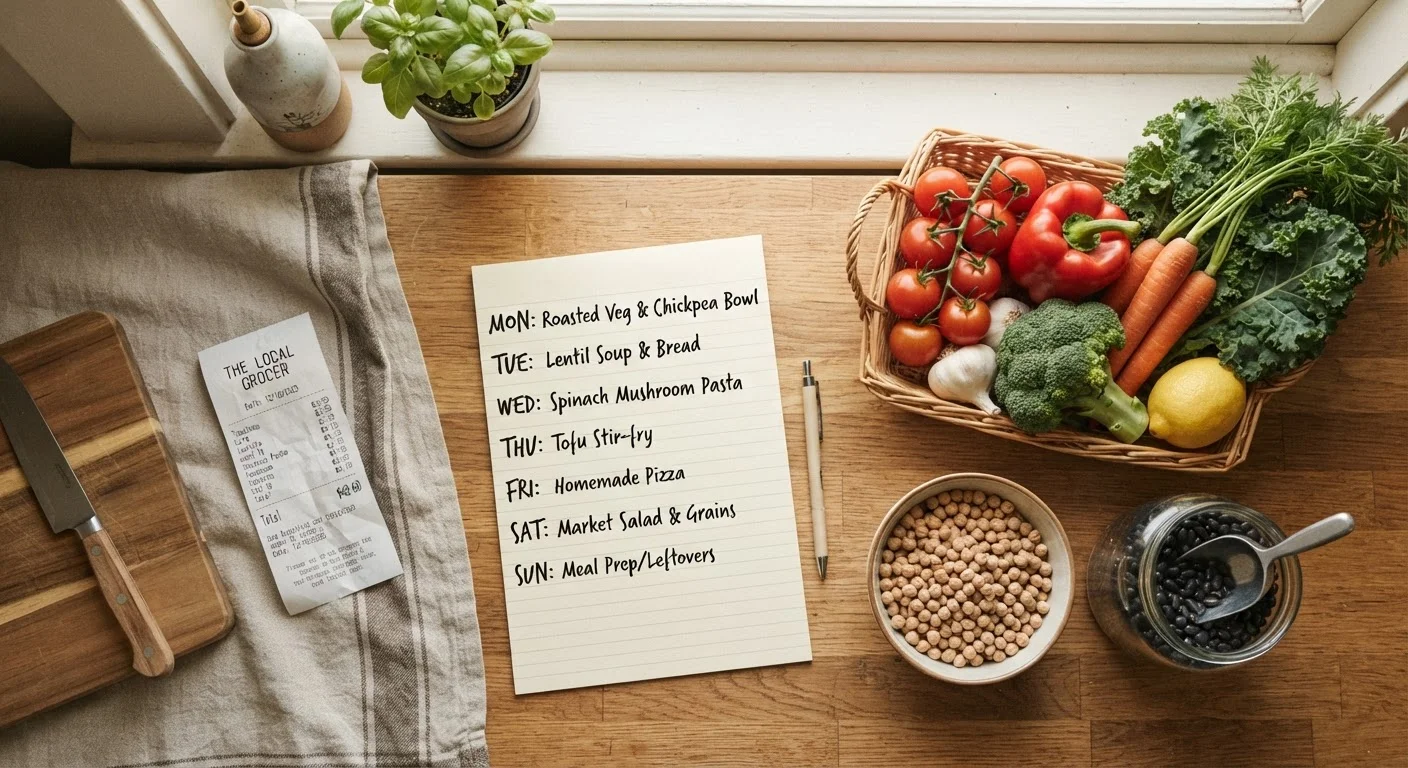
Before writing a single meal on paper, take stock of what is already in your kitchen. Open the freezer, check the pantry, and note proteins, grains, and canned goods that need to be used. These become free meals in the weekly plan.
What you will need
Once you know what you have, you can build outward from those existing ingredients rather than starting from zero every week.
How to build the plan step by step
The steps below walk through a repeatable planning process. Run through it once on Sunday morning or Saturday evening, and your week becomes significantly simpler. For families who want to take this further, our guide to batch cooking from scratch covers prepping and storing large quantities so weeknights require minimal effort.
Set your protein anchors for the week
Choose two or three proteins that will anchor multiple meals. Ground beef, whole chicken, eggs, canned tuna, and dried beans are among the most cost-effective options. A whole chicken, for example, can provide a roast dinner, a lunch of shredded meat over rice, and a pot of broth-based soup, all from one purchase. Assign each protein to at least two meals so nothing goes to waste.
If you use ground beef, see our guide on stretching ground beef to make a pound feed more people by mixing in legumes and grains.
Build meals around shared vegetables
Pick two or three vegetables that appear in multiple meals across the week. Carrots, cabbage, onions, potatoes, and frozen spinach hold up well, cost less per pound than specialty produce, and work in a range of dishes. A bag of carrots can go into a stir-fry on Tuesday, a soup on Thursday, and a quick roasted side on Saturday.
Check what is in season before you finalize this list. Seasonal produce typically costs less and is available in larger quantities. Our article on cooking with seasonal produce gives a clear picture of how to work those fluctuations into a stable plan.
Assign a meal to every day, including one or two no-cook nights
Write out all seven dinners, five lunches (or pack leftovers), and a basic breakfast plan. Leave one or two dinners as planned leftover nights rather than cooking fresh. This reduces both cook time and the total ingredient list. Breakfasts are the easiest place to keep costs low: oatmeal, eggs, and whole-grain toast are inexpensive and filling.
Designate one weeknight as a freezer meal night if you have anything stored. Our freezer-friendly meals guide covers which dishes freeze and reheat without losing quality.
Write the grocery list by category
Translate your meal plan into a single grocery list organized by section of the store: produce, dairy, meat, dry goods, and frozen. Cross off anything you already have at home. Writing the list by category reduces time in the store and prevents backtracking, which also reduces impulse purchases.
Total the estimated cost as you write the list. If you are over $100, remove or reduce higher-cost items first: specialty cheeses, pre-cut produce, and name-brand pantry goods are the quickest places to trim without changing the meals themselves.
Do a short Sunday prep session
After shopping, spend 20 to 30 minutes on basic prep: wash and chop vegetables, cook a pot of grains, and portion proteins. This is not full batch cooking, just enough prep to make weeknight assembly fast. Cooked rice keeps in the refrigerator for four days. Chopped onions and carrots are ready for any dish. Hard-boiled eggs cover breakfast and quick lunches for several days.
Families who want to go further with batch cooking can read our complete batch cooking guide for a full system covering large-quantity prep and storage.
Keeping the budget intact through the week
Planning is the first step, but sticking to the budget through the week takes a few habits. First, cook the most perishable proteins early in the week and lean on pantry-based meals toward the end. A pot of lentil soup or rice and beans on Thursday costs almost nothing and uses what is left.
Second, portion leftovers deliberately. If Monday's roast chicken feeds four at dinner, the remaining meat should already be assigned to Tuesday's grain bowl or Wednesday's soup before the plates are cleared.
Seasonal produce is one of the easiest ways to keep costs down without changing the structure of your plan. Cooking with seasonal produce explains how to build that flexibility into a routine so swaps feel natural rather than disruptive.
For nights when dinner needs to come together in under 30 minutes, sheet pan meals are worth adding to your rotation. One pan, one oven, and whatever protein and vegetables you have on hand.
One small habit that prevents overspending
Before finalizing your grocery list each week, check the store circular for produce and protein sales. Build those sale items into the plan rather than buying what is on sale and figuring out the meal afterward. That single habit can shave $10 to $20 off a typical weekly shop without changing how your family eats.