

Key Takeaways
- Most household food waste comes from a predictable set of storage and planning habits, not one-off accidents.
- A waste audit takes less than an hour and can reveal recurring patterns that cost families real money each week.
- Forgotten leftovers, poor pantry rotation, and unplanned buying are the three most common waste sources for families.
- Simple tracking habits after the audit are often enough to cut weekly waste without changing how you cook.
- Pairing audit results with a structured meal plan multiplies the savings over time.
Summary
22 items · 20 to 45 minutes
Why a waste audit is worth your time
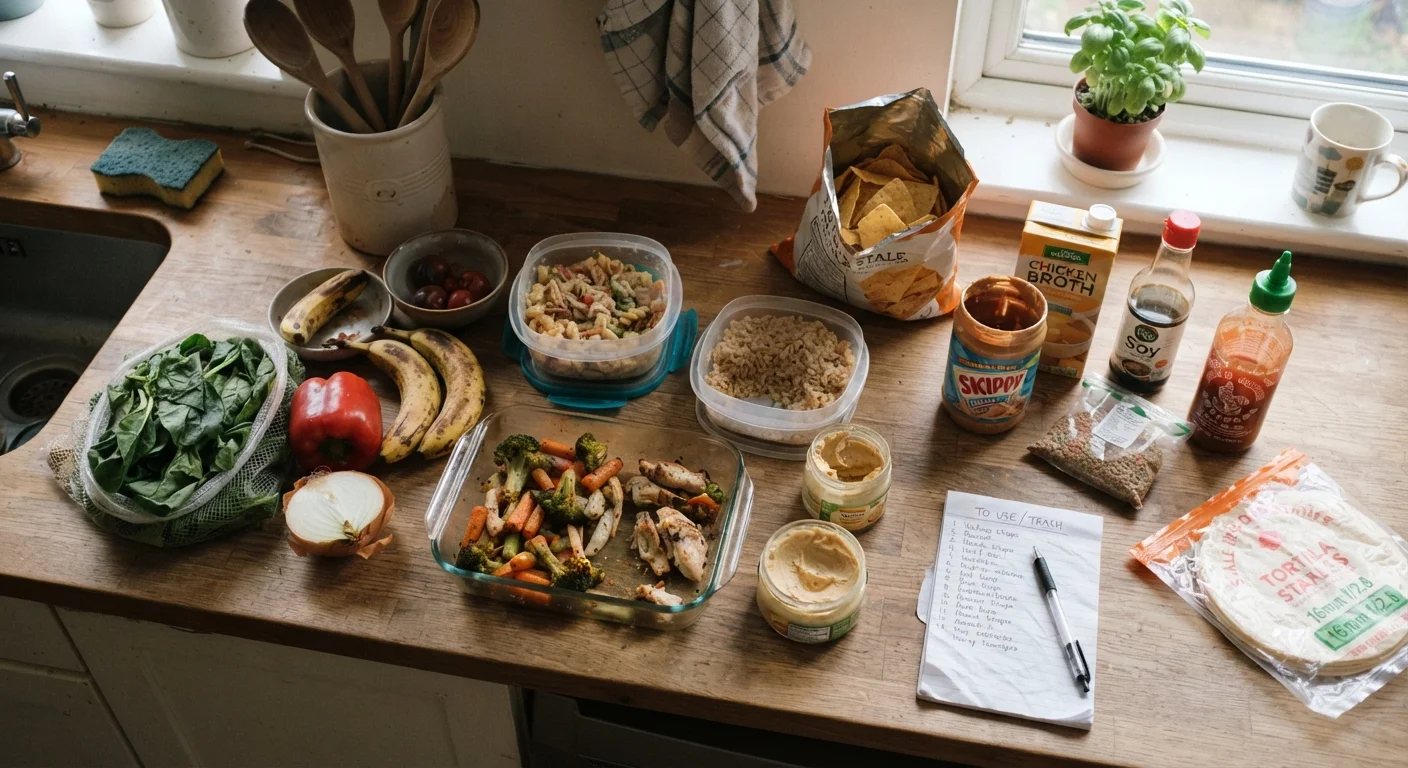
Food waste is one of the quieter drains on a family grocery budget. Unlike an impulse purchase that shows up clearly on a receipt, wasted food disappears slowly: a container pushed to the back of the fridge, a bag of spinach that softens before anyone uses it, pantry staples that expire untouched. The pattern repeats week after week without ever triggering a moment of recognition.
A kitchen waste audit interrupts that cycle. It asks you to look at what you are actually discarding rather than what you intended to use. The findings are often more specific than people expect: not "we waste too much produce" but "we consistently overbuy salad greens and never finish cooked rice." That specificity is what makes the audit worth doing, because targeted fixes work better than general resolutions.
This checklist walks your household through the audit in a single session. You will examine your fridge, freezer, and pantry, document your disposal habits, and identify the two or three patterns most worth addressing. From there, a weekly meal planning framework gives you a structured way to act on what you find.
Fridge review
Freezer check
Pantry and dry goods
Disposal habits
Planning and buying habits
What to do with your audit results
Once you have worked through the checklist, look for items that show up more than once across categories. If produce appeared under both fridge and pantry, buying habits or storage methods are the root issue. If leftovers dominate, portion planning or scheduled use-it-up meals will do more than any storage upgrade.
One audit alone will not fix the pattern
A single session identifies what went wrong but does not change the habits that caused it. Plan a shorter 10-minute fridge check once a week, and schedule at least one meal per week built around whatever needs to be used up soon. Without that follow-through, waste levels typically return to their baseline within a month.
Bulk purchases deserve a specific look. Food bought in large quantities to save money can cost more in the end if portions go bad before use. The article why bulk buying is not always the bargain it appears to be covers where those savings commonly erode.
For families looking to reduce waste while expanding what they cook, cooking with seasonal produce offers a practical approach to flexible meal planning built around what is affordable and available. And if you want to put audit results to immediate use, batch cooking from scratch is a direct next step for turning pantry staples into ready-to-eat meals before they go unused.
Waste patterns in the kitchen and overspending habits in other categories often share the same root cause: buying more than the household needs. If that theme comes up in your audit, it is worth reading about spending habits that quietly drain your budget in other areas of household life as well.