

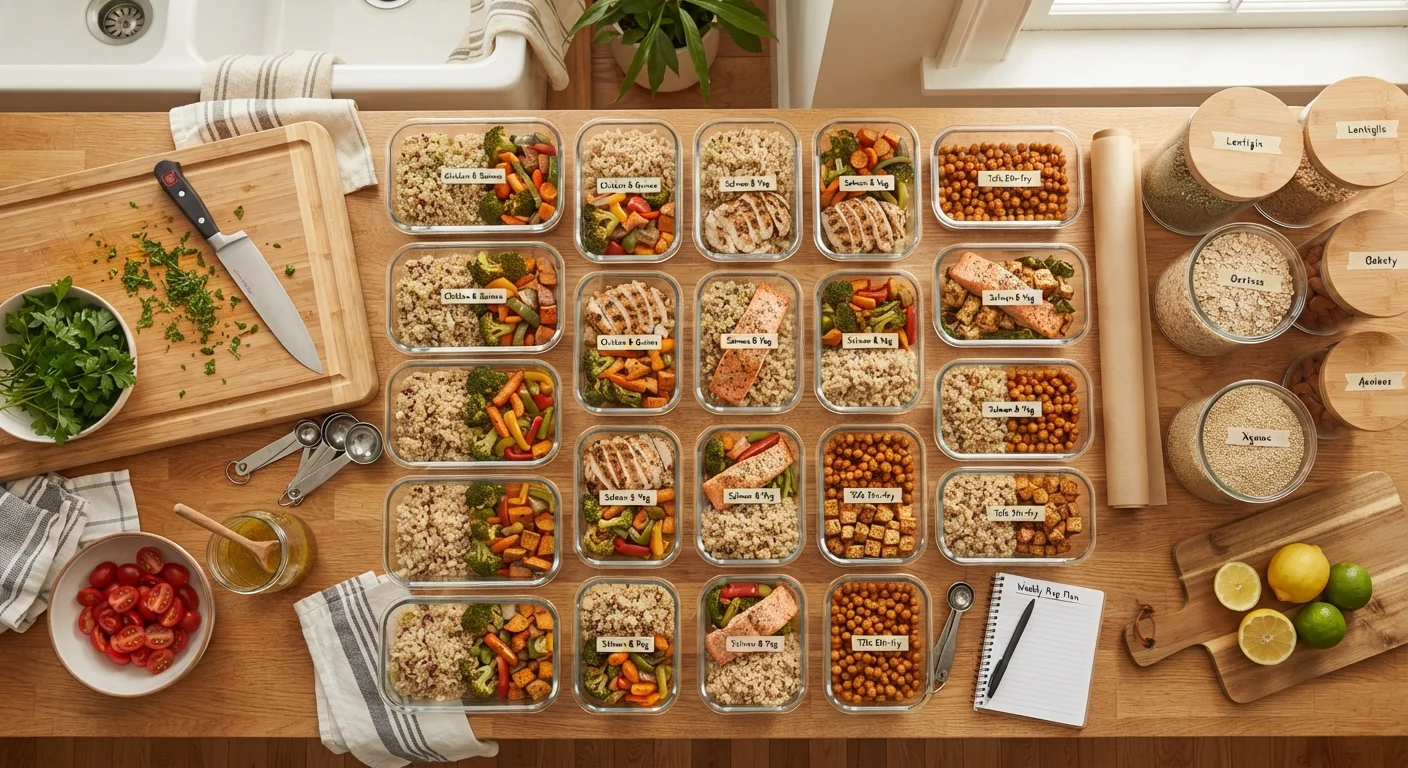
Key Takeaways
- Batch cooking means preparing large quantities of food at once so weeknight meals require minimal effort.
- Planning around a short list of versatile ingredients keeps grocery costs down and reduces waste.
- Most cooked foods stay safe in the refrigerator for three to four days and in the freezer for up to three months.
- Starting with just two or three components per session is enough to feel a real difference on busy nights.
- Seasonal produce and shelf-stable staples like grains and legumes are the most cost-effective batch cooking foundations.
Start here
What batch cooking actually means
Next
Planning your first batch cook session
Then
How to run the cooking session efficiently
Before you eat
Storing and reheating safely
Troubleshoot
Common mistakes and how to avoid them
What batch cooking actually means
Batch cooking means preparing a large amount of food in one session so that meals throughout the week require little more than reheating or quick assembly. It is not the same as making one big recipe and eating it five nights in a row. The goal is to have a set of ready-made components, cooked grains, portioned proteins, roasted vegetables, and sauces, that combine into different meals each night.
Families who do it consistently tend to spend less on takeout and waste less food because ingredients are already cooked and easy to use before they go bad. If you want a fuller picture of how this fits into a family nutrition routine, the family wellness guide covers the broader context of how food habits connect to overall health.
Batch cooking
Preparing large amounts of food in a single session so that meals during the week need little additional cooking. The focus is usually on components rather than complete dishes.
Component cooking
Cooking individual elements, such as grains, proteins, and vegetables, separately so they can be combined in different ways throughout the week.
Meal prep
A broader term for any advance preparation of food, which can include batch cooking, pre-chopping vegetables, or portioning snacks into ready-to-grab servings.
Refrigerator safe window
The period during which refrigerated cooked food remains safe to eat. The USDA sets this at three to four days for most cooked foods.
Temperature danger zone
The temperature range between 40 degrees Fahrenheit and 140 degrees Fahrenheit where bacteria grow most rapidly in food. Proper cooling and reheating keep food out of this range.
Planning your first batch cook session
Good planning is what separates a productive cook session from a chaotic one. Start by choosing three to five recipes or components that share ingredients. Brown rice, for example, works in a grain bowl, inside a burrito, and alongside stir-fried vegetables. That kind of overlap keeps the grocery list short and the cost per meal low.
Check what is already in the pantry before writing your shopping list. Shelf-stable staples like dried beans, canned tomatoes, and pasta are often already there. For fresh produce, seasonal produce tends to cost less and taste better, so it is worth building your vegetable choices around what is in season rather than a fixed list.
A written plan also helps with the shopping itself. Pairing batch cooking with a weekly meal framework, like the one described in the weekly family meal plan guide, can help you match the right quantities to the right number of people without overbuying.
How to run the cooking session efficiently
The most efficient approach is to run multiple cooking methods at the same time. While a pot of beans simmers on the stove, a sheet pan of vegetables can roast in the oven, and a batch of grains can cook in a second pot. Reading through all your recipes before you start lets you sequence the steps so nothing sits waiting for something else to finish.
Proteins that take the longest, such as a whole chicken or a large cut of beef, should go in first. Vegetables roast in fifteen to twenty-five minutes depending on thickness, so they can go in while proteins finish. Grains take fifteen to forty-five minutes depending on the type, making them easy to manage in parallel.
For families new to this approach, sheet pan cooking is a practical technique to have in the same session. A single tray of mixed protein and vegetables can function as one of your ready-made components with almost no additional effort.
If you want to extend the value of proteins further, stretching ground beef with grains and legumes is a straightforward way to get more servings from a single pound of meat.
Label everything before it goes in the fridge
Use masking tape and a permanent marker to write the item name and date on every container. This takes under a minute per session and prevents the common habit of throwing out unlabeled containers mid-week out of uncertainty. Containers without dates tend to get ignored and eventually wasted.
Storing and reheating safely
Once cooking is done, food needs to cool before it goes into storage containers. Placing very hot food directly into the refrigerator raises the internal temperature of the appliance and can put other foods in the unsafe zone. Spread food out in shallow containers or set pots in an ice bath to speed cooling. The USDA recommends that cooked food reach refrigerator temperature within two hours of cooking.
Airtight containers in the right sizes matter more than most people expect. Large containers work for grains and soups. Smaller ones are better for sauces and portions that will be used one at a time. Labeling everything with the date takes about thirty seconds and removes any guessing later in the week.
Cooked food stored in the refrigerator is generally safe for three to four days. The freezer extends that to about three months for most items without significant quality loss. Defrost frozen items in the refrigerator overnight rather than on the counter, which keeps food out of the temperature range where bacteria grow most rapidly.
If you notice you are throwing out cooked food regularly, a kitchen waste audit can help you identify where the disconnect is between what you cook and what the family actually eats.
Common mistakes and how to avoid them
The most common first-session mistake is cooking too much of too many things. Starting with two or three components, rather than six or seven, gives you enough to work with without overwhelming the refrigerator or burning out on the process after one week.
Cooking complete meals instead of components is a related issue. A full lasagna, for instance, is harder to repurpose than a batch of cooked ground beef and a batch of tomato sauce kept separate. Components give you more flexibility for the same amount of effort.
Skipping the label step leads to a lot of food being thrown out mid-week. When containers are not dated, families tend to avoid them out of uncertainty, which defeats the purpose entirely. A simple masking tape and marker system takes almost no time and prevents waste.
Finally, planning meals that nobody actually wants to eat produces the same waste as not planning at all. The batch cook session works best when it is built around dishes the family already likes, not around what seems like the most efficient or nutritious option on paper.