

Key Takeaways
- Impulse purchases driven by social media trends account for a large share of beauty overspending.
- Buying multiples 'just in case' often leads to expired, wasted products before they are ever used.
- Skipping a written beauty budget makes it nearly impossible to notice gradual spending creep.
- Many affordable drugstore formulas contain the same active ingredients as higher-priced alternatives.
- Tracking what you actually finish versus what expires can reveal where your budget leaks most.
Why beauty budgets slip without warning
Beauty spending rarely blows up all at once. It erodes in small, easy-to-justify increments: a $12 mascara here, a flash-sale serum there, a full-size moisturizer purchased because the travel size ran out at an inconvenient moment. Over a year, those increments can quietly add up to hundreds of dollars spent on products that overlap, expire, or never get opened.
The patterns behind this creep are predictable, which means they are also fixable. Understanding why these habits form is the first step toward building a beauty routine that works for your skin and your budget at the same time. For families juggling multiple household members' needs, the math compounds fast.
If you want a broader look at how product pricing actually relates to quality, this breakdown of ingredient labels and value is a useful starting point.
Buying products based on social media trends rather than personal skin or hair needs.
Why it happens: Short-form video content is designed to create desire quickly, and a glowing before-and-after is more compelling than an ingredient list. Products get purchased before there is any reason to believe they will work for a specific person's skin type or concern.
Owning redundant products that serve the same function.
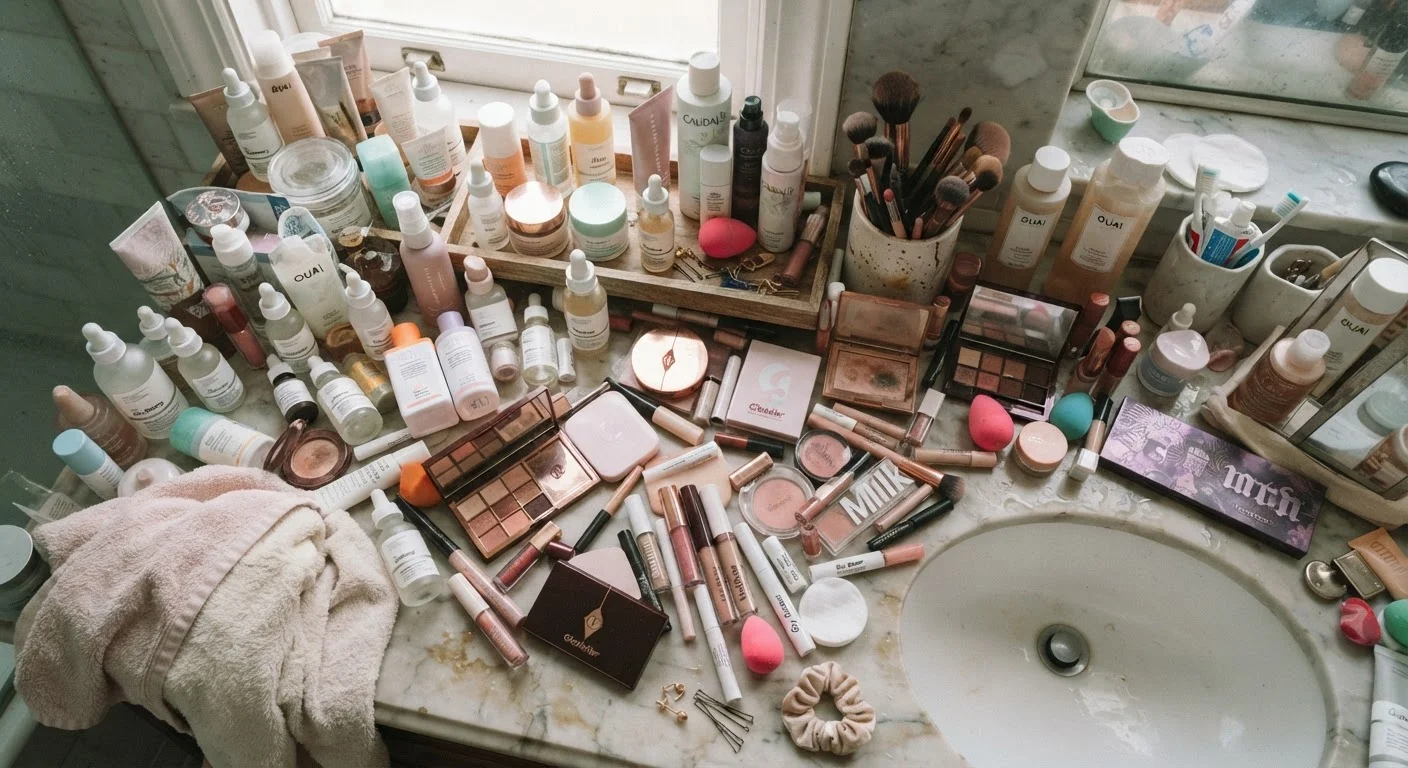
Why it happens: Shoppers often buy a new version of something they already have because it promises a slightly different benefit, or because the packaging looks more appealing. Over time, this creates a shelf full of four moisturizers, three lip balms, and two nearly identical foundations.
Purchasing large sizes or multipacks to 'save money' without checking whether you will use the product before it expires.
Why it happens: Bulk pricing feels like smart math, and the per-unit savings are real on paper. But beauty products have expiration dates, and many active ingredients degrade well before the container is empty.
Assuming a higher price means a more effective product.
Why it happens: Premium packaging, aspirational marketing, and retail placement all signal quality in ways that are hard to discount. Many shoppers equate cost with performance without examining what the formula actually contains.
Shopping without a list or a spending limit.
Why it happens: Beauty aisles and websites are designed to encourage browsing. Without a specific purchase in mind and a cap on what you plan to spend, it is easy to arrive for one item and leave with five.
Neglecting scalp and hair care basics in favor of styling products, then spending more to repair damage.
Why it happens: Styling products deliver visible, immediate results, so they feel worth the spend. Maintenance products like scalp treatments or moisturizing conditioners seem less exciting, so they get skipped until a problem develops.
How to build a routine that sticks to a budget
Once you recognize the habits above, the corrective steps are straightforward. Write down every product currently in your routine, what it costs per month to replace, and when you last used it. That inventory alone tends to be revealing.
A written beauty budget, even a rough one, changes behavior. People who track spending in any category consistently spend less than those who rely on memory. Set a monthly cap that covers your actual needs, then treat anything outside that cap as a deliberate exception rather than a routine purchase.
Expired products can irritate skin
Using skincare or makeup past its period-after-opening date is not just wasteful, it can cause irritation or infection, particularly with eye products and anything containing active acids. If you are unsure whether a product is still good, check the open-jar symbol on the packaging and note when you first opened it. When in doubt, discard it. This is general guidance; consult a dermatologist if you experience a skin reaction.
If your household is new to building affordable routines from scratch, this beginner's guide to the drugstore beauty aisle walks through the essentials without the overwhelm. And when you're wondering whether a particular category is worth paying more for, this guide on when to splurge versus save explains where quality gaps are real and where they are not.
The same pattern of invisible spending creep shows up in other household categories too. Families booking travel face similar blind spots, with small fees and skipped steps adding up before a trip even starts.