

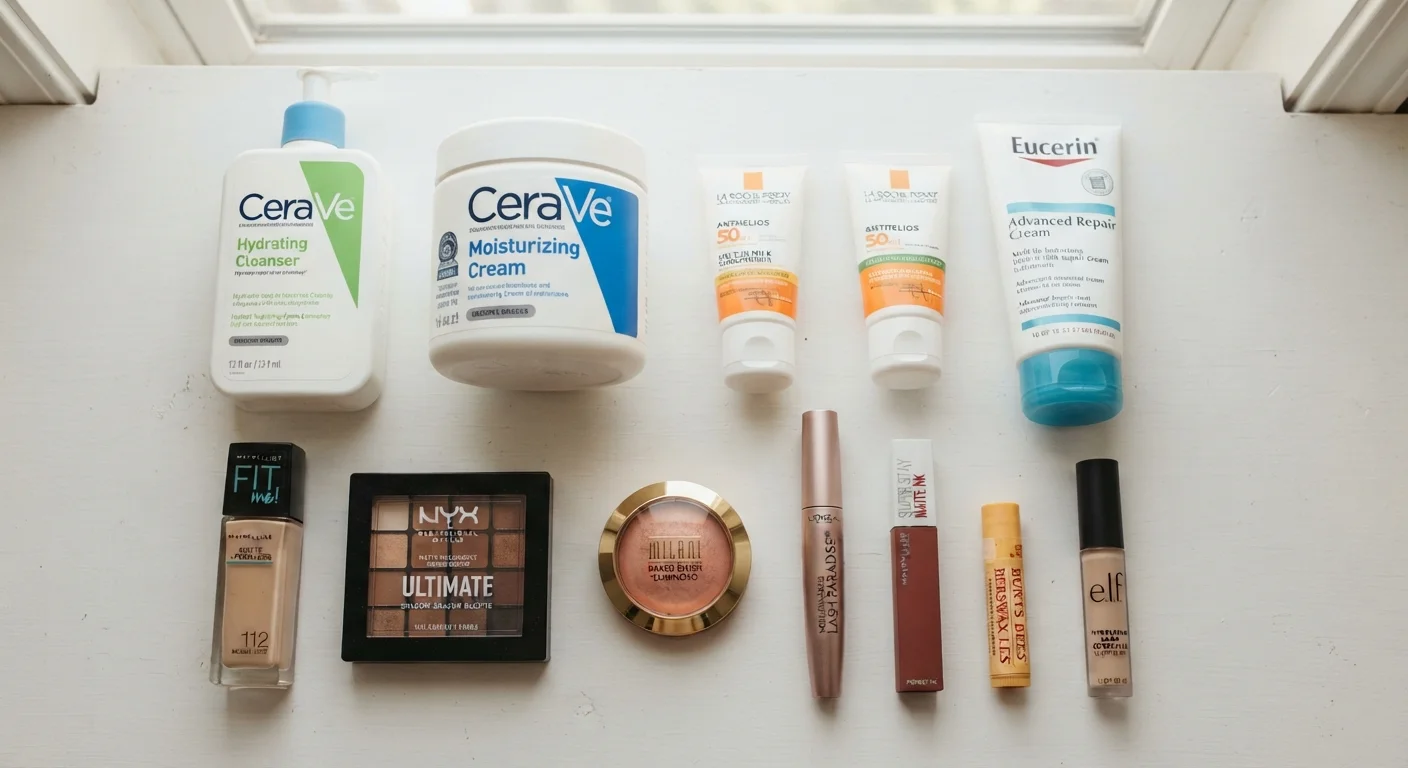
Key Takeaways
- A three-step skincare routine (cleanse, moisturize, protect) is enough for most beginners.
- Ingredient lists, not price tags, tell you what a product actually does.
- Starting with fewer products reduces the chance of skin irritation and wasted money.
- Patch testing a new product before full use lowers the risk of a bad reaction.
- Budget options in several categories perform comparably to pricier alternatives.
Start here
Why the beauty aisle feels so overwhelming
Next
The four categories worth knowing first
Then
How to read a product label without a chemistry degree
Apply it
Building your first routine on a real budget
Avoid pitfalls
Mistakes beginners make and how to sidestep them
Why the beauty aisle feels so overwhelming
Walk into any large drugstore and the beauty section can feel like a wall of noise: hundreds of products, overlapping claims, and shelf tags in every color. For a first-timer, none of it signals where to begin.
The problem is not that beauty is complicated. The problem is that retail displays are organized by brand, not by need. Once you understand what your routine actually requires, the aisle shrinks to a manageable handful of items.
The goal here is to cut through that noise and give you a clear, low-cost starting framework, whether you are shopping for yourself or trying to help a teenager figure out their first routine.
Broad-spectrum SPF
A sunscreen that protects against both UVA rays (which cause aging) and UVB rays (which cause burning). The SPF number indicates the level of UVB protection.
Humectant
An ingredient that pulls moisture from the air or deeper skin layers toward the surface. Glycerin and hyaluronic acid are common examples.
Emollient
An ingredient that softens and smooths skin by filling gaps between skin cells. Oils and butters are typical emollients.
Occlusive
An ingredient that sits on top of the skin and slows water from evaporating. Petrolatum (petroleum jelly) is one of the most well-known examples.
Patch test
Applying a small amount of a product to a discreet area of skin and waiting 24 to 48 hours to check for irritation before using it more broadly.
Fragrance-free
A product formulated without added scent ingredients. This reduces the chance of irritation, particularly for sensitive or reactive skin types.
The four categories worth knowing first
Most beginner routines draw from four product categories. You do not need all of them on day one, but knowing what each does helps you shop with intention.
Cleansers
A cleanser removes dirt, oil, and leftover product from the skin. For beginners, a gentle, fragrance-free formula is a safe default regardless of skin type. Foaming gels tend to suit oilier skin, while cream or milk formulas work for drier skin.
Moisturizers
Moisturizers help the skin retain water. They come in lotions, creams, and gels. Lighter gels suit oily or combination skin; richer creams suit dry or mature skin. Understanding which ingredients do the work can help you choose without overspending.
Sun protection
Broad-spectrum SPF 30 or higher is the one product most dermatologists consistently recommend. Sun exposure is a leading cause of premature skin aging, so this step has an outsized return for a modest cost.
Hair care basics
Shampoo and conditioner suited to your hair type are enough to start. Scalp health matters more than most people realize, and a simple washing routine protects it without requiring specialty products.
How to read a product label without a chemistry degree
Ingredients are listed in descending order by concentration. The first five or six ingredients make up the bulk of what you are putting on your skin, so those matter most.
A few terms worth recognizing:
- Humectants (such as glycerin and hyaluronic acid) draw moisture into the skin.
- Emollients (such as shea butter and plant oils) soften and smooth.
- Occlusives (such as petrolatum and dimethicone) form a barrier that slows water loss.
- Fragrance is a common irritant. If your skin is sensitive, fragrance-free products reduce that risk.
You do not need to recognize every ingredient. Knowing these basic categories is enough to compare two products side by side and pick the one that matches what your skin needs. Our guide on building a skincare routine on a drugstore budget goes deeper on ingredient combinations that work well together.
Building your first routine on a real budget
A three-step morning routine covers the basics: cleanse, moisturize, apply SPF. At night, cleanse again and moisturize. That is it for a starter routine. Adding more steps before you understand how your skin responds makes it harder to know what is working or causing a reaction.
When you are ready to introduce a new product, try one at a time and give it at least four weeks before evaluating. This is especially worth doing for anything that goes on your face. Our practical checklist for trying a new skincare product covers patch testing and what to watch for.
Household staples can also fill gaps without extra spending. Your family medicine cabinet likely already holds items with well-documented skin uses, such as petroleum jelly for dry patches or oat-based products for irritated skin.
One product at a time
Introduce new products one at a time, spaced at least two to four weeks apart. If your skin reacts, this makes it much easier to identify the cause. Introducing several products at once turns troubleshooting into guesswork.
Mistakes beginners make and how to sidestep them
Buying too much at once is the most common starting error. It depletes a budget fast and makes it impossible to figure out which product helped or hurt. Start with three to four items and resist adding more until you have a stable baseline.
Chasing trends rather than addressing actual skin needs leads to a cluttered, expensive shelf. Social media often promotes products based on aesthetics or sponsorship rather than skin science. Ingredients and skin type are more reliable guides than virality.
Skipping SPF because it feels optional is another frequent misstep. Sun protection has more evidence behind it than most other skincare steps combined, and drugstore SPF options are widely available at low price points.
Overspending creeps in quietly. Common spending patterns in beauty are easy to fall into but also straightforward to course-correct once you know what they look like. And if you are ever unsure whether a pricier product is worth it, the splurge-vs-save breakdown gives you a clear framework for deciding.