

Key Takeaways
- A three-step cleanse, tone, and moisturize routine covers most skin needs at any budget level.
- Drugstore ingredients like niacinamide and hyaluronic acid perform comparably to their pricier counterparts.
- Applying products in the correct order matters more than the number of products you use.
- SPF in the morning is the single most effective step for long-term skin health.
- Patch testing any new product before full use reduces the risk of irritation.
What you will need
Why a simple routine works
A skincare routine does not need to be elaborate to be effective. Dermatologists generally agree that a consistent basic routine, done twice daily, delivers more results than an expensive but inconsistent one. The core three steps, cleansing, toning, and moisturizing, address the skin's fundamental needs: removing debris, restoring balance, and sealing in hydration.
Drugstore formulations have improved considerably over the past decade. Many now contain the same active ingredients found in higher-priced lines, including niacinamide (a form of vitamin B3 that helps even skin tone), hyaluronic acid (a humectant that draws moisture into the skin), and ceramides (lipids that support the skin barrier). If you are newer to navigating the beauty aisle on a budget, the beginner's guide to drugstore beauty covers how to read labels and prioritize steps without feeling overwhelmed.
Consistency matters more than cost
Using an affordable product every day will generally outperform an expensive one used sporadically. Give any new routine at least four weeks before evaluating whether it is working. Skin cell turnover takes time, and results are rarely visible in under two weeks.
What you need before you start
Before picking up any new product, gather a few pieces of information about your skin. Knowing whether your skin tends to be oily, dry, combination, or sensitive helps you match ingredient lists to your actual needs rather than guessing at the shelf.
You should also be aware of any known allergies or sensitivities, particularly to fragrances, alcohol, or common preservatives. Patch testing, applying a small amount of a new product to the inside of your wrist or behind your ear for 24 to 48 hours before using it on your face, is a reliable way to check for reactions. For a full checklist on this process, see the practical safety checklist for new skincare products.
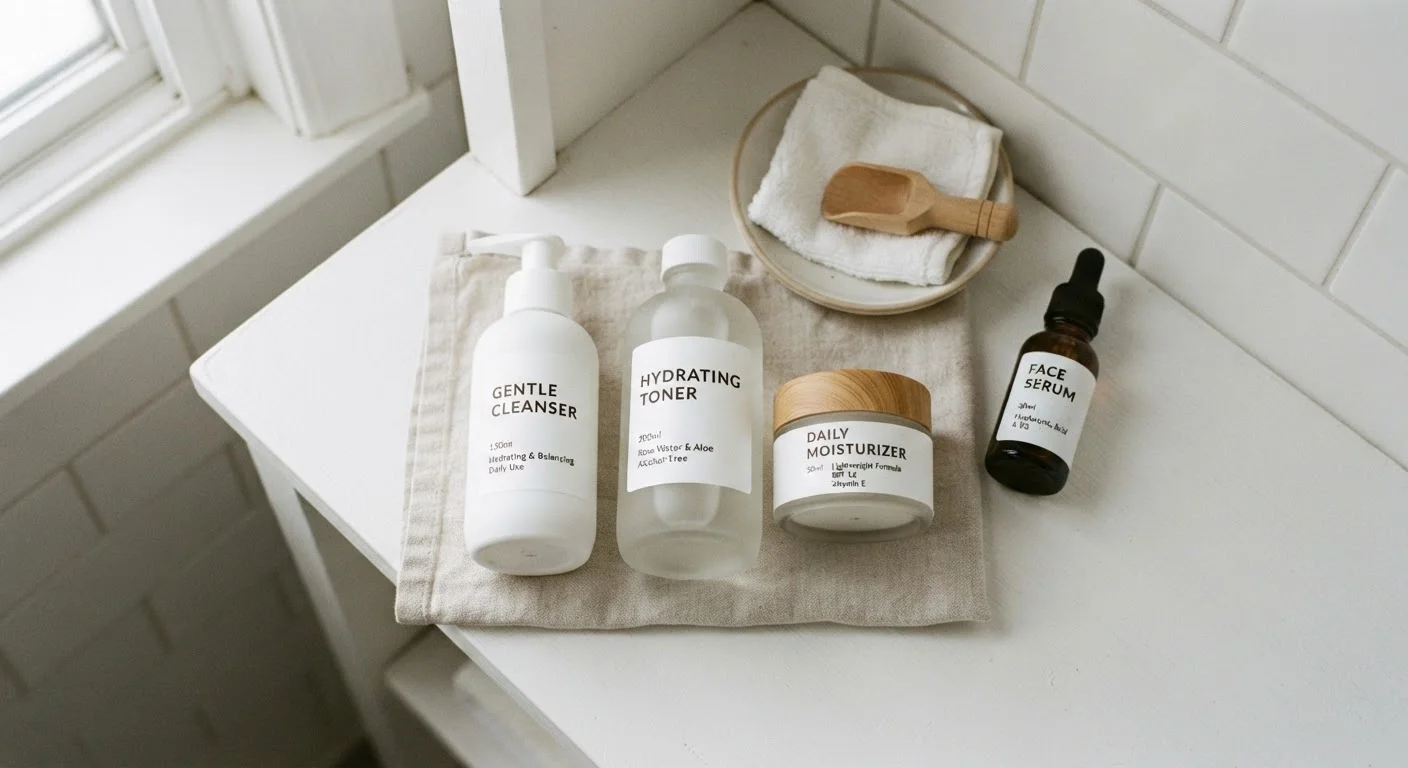
What you will need
Step-by-step: building your routine
The steps below cover a morning and evening routine using products commonly available at grocery stores, pharmacies, and mass-market retailers across the US. Prices at these stores are generally a fraction of department store or specialty beauty counter options.
Cleanse morning and evening
A gentle, low-pH cleanser removes sweat, oil, sunscreen, and environmental debris without stripping the skin barrier. Look for terms like "gentle," "hydrating," or "non-foaming" on the label if your skin leans dry or sensitive. If your skin is oilier, a foaming or gel cleanser typically works better.
Use lukewarm water, massage the cleanser in for about 30 seconds, and rinse thoroughly. Avoid hot water, which can break down the skin's natural lipids faster than necessary.
Apply toner while skin is still damp
Toner is optional but useful. A hydrating toner (often called a "hydrating mist" or "essence" in drugstore language) can restore the skin's natural pH after cleansing and prep it to absorb the next step more efficiently.
Avoid toners that list alcohol denat. or isopropyl alcohol near the top of the ingredient list, especially if your skin is dry or sensitive. These can be overly drying. Instead, look for toners with glycerin or aloe vera as primary ingredients.
Moisturize to seal hydration
A moisturizer does two things: it adds hydration and it forms a light barrier to slow water loss from the skin. Ingredients like glycerin and hyaluronic acid attract water, while dimethicone or petrolatum help hold it in. You do not need both a serum and a moisturizer to start. A single moisturizer with a mix of these ingredients covers both functions adequately for most skin types.
Apply while skin is still slightly damp from the toner step for better absorption.
Add SPF in the morning (non-negotiable)
Sunscreen is the most evidence-backed product in any skincare routine. Daily use of SPF 30 or higher is associated with reduced sun damage and slower visible aging, according to established dermatological guidance. Many drugstore moisturizers include SPF 30, which allows you to combine steps three and four into one product.
If you use a separate SPF product, apply it as the last step in your morning routine, after moisturizer. Reapply when spending extended time outdoors.
Add targeted treatments only when basics are working
Once your three-step routine feels comfortable and your skin has adjusted (typically after four to six weeks), you can consider adding one targeted treatment. Common drugstore options include niacinamide serums for uneven tone, salicylic acid for acne-prone skin, or a retinol product (vitamin A derivative) for texture concerns.
Introduce one new product at a time and wait several weeks before judging results or adding another. Layering too many actives at once makes it impossible to identify what is helping or causing irritation.
Keeping costs low over time
The biggest waste in skincare is products that get used once and forgotten. Buying one product per step, testing it for four to six weeks, and replacing only when it runs out keeps spending predictable. A simple three-step routine can cost less than $20 to start and last several months with consistent use.
Many household staples also double as useful beauty tools. Petroleum jelly works as an overnight lip and cuticle treatment. Plain oat-based products can calm irritated skin. For a broader look at what might already be in your home, the family medicine cabinet as a beauty toolkit article is worth a read. The same budget-conscious mindset applies to hair care: see the guide to hair care on a budget for a parallel approach to scalp and strand health.
This article is for informational purposes only and does not constitute medical or dermatological advice. If you have a skin condition, persistent irritation, or any concerns about ingredients and medications, consult a licensed healthcare provider or dermatologist.