

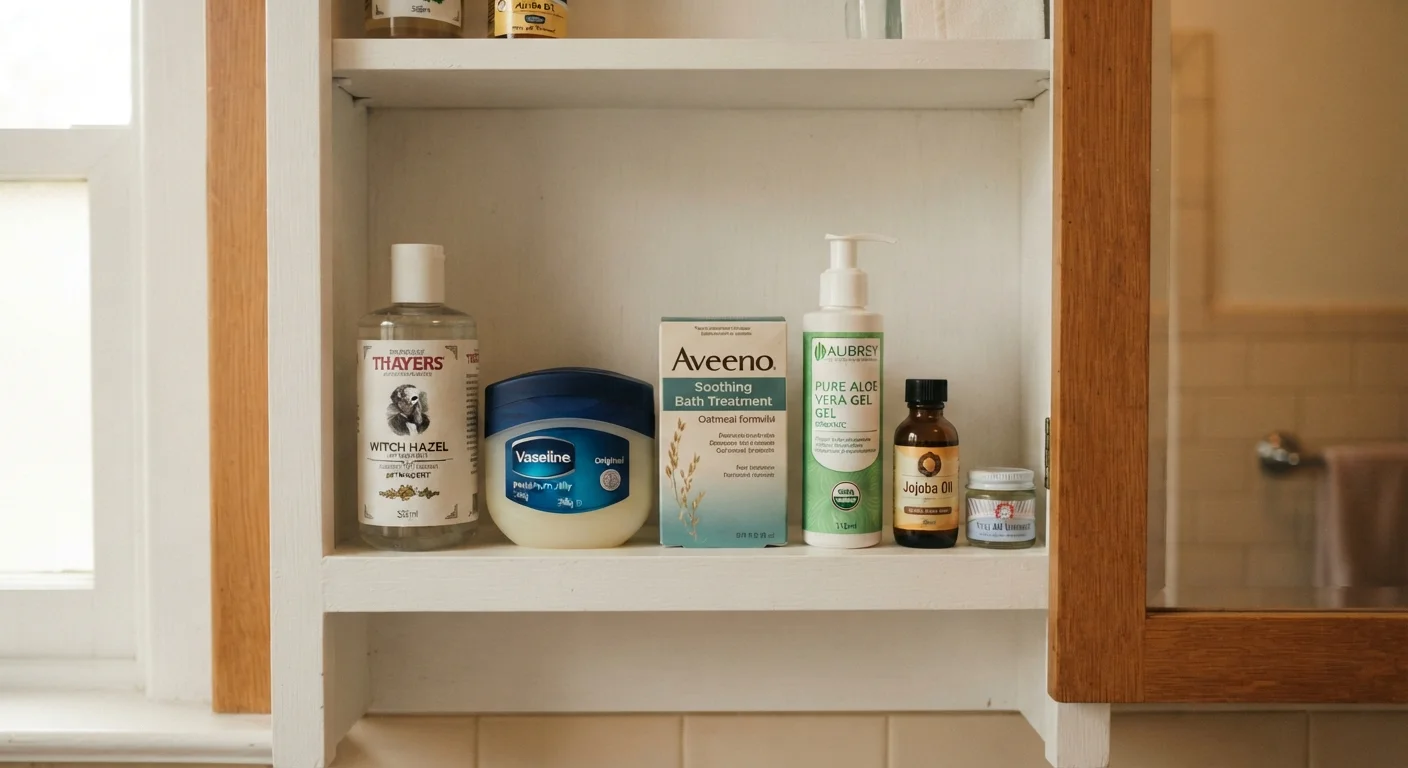
Key Takeaways
- Petroleum jelly is a dermatologist-recognized moisturizer and skin barrier protector suited for multiple uses.
- Witch hazel acts as a gentle astringent that may help reduce the appearance of temporary skin irritation.
- Colloidal oatmeal has FDA-recognized skin-soothing properties useful for sensitive or dry skin.
- Aloe vera gel from the pharmacy can double as a lightweight, fragrance-free skin soother.
- Patch testing any new product or ingredient on a small skin area first is strongly recommended.
- These staples work best as supplements to, not replacements for, professional skincare advice.
What's already in your cabinet
Most American families keep a medicine cabinet stocked for bumps, scrapes, and seasonal sniffles. What many people don't realize is that several of those everyday staples have documented skin-care properties that beauty brands have been reformulating into premium products for years. Understanding what those ingredients actually do, and what they don't do, can help your family get more value out of what you already own.
This article covers general information about common household ingredients and their publicly documented properties. It is not medical advice, and it is not a substitute for guidance from a dermatologist or other qualified healthcare professional. If you or a family member have a skin condition, allergy history, or any concern about a new ingredient, consult a professional before use. For practical tips on building a fuller routine around affordable ingredients, see how to build a skincare routine on a drugstore budget.
Petroleum jelly as a moisture barrier
Petroleum jelly (also labeled as petrolatum) is an occlusive moisturizer, meaning it works by forming a barrier on the skin surface that slows water loss rather than adding moisture directly. Dermatologists widely recognize it as a well-tolerated option for dry skin, chapped lips, and minor skin irritation. Because it is fragrance-free, dye-free, and non-comedogenic at standard formulations, it is considered suitable for sensitive skin by many skincare professionals.
Common uses include applying a thin layer to dry cuticles, heels, or elbows overnight, and using a small amount on lips before bed. It is also sometimes applied as a final step over a moisturizer to seal in hydration, a technique sometimes called "slugging" in skincare communities. People with acne-prone skin sometimes prefer to avoid it on the face, though evidence on this point is mixed. When in doubt, speak with a dermatologist.
Petroleum jelly is a fragrance-free, well-tolerated occlusive that dermatologists widely recognize for dry skin care.
Witch hazel as a gentle astringent
Witch hazel is a plant-derived liquid extracted from the bark and leaves of the Hamamelis virginiana shrub. It has been used in traditional skin care for a long time and appears in many toners and cleansing formulas sold at drugstores today. Its primary documented property is as an astringent, which means it can temporarily tighten the appearance of pores and reduce surface oiliness.
Alcohol-free witch hazel formulas are generally gentler and less likely to cause dryness with regular use. Witch hazel is not a treatment for acne or any skin condition, and applying it to broken or irritated skin is not recommended. If you have sensitive or rosacea-prone skin, check with a dermatologist before adding any astringent to your routine.
Alcohol-free witch hazel can temporarily reduce surface oiliness without the drying effect of alcohol-based toners.
Colloidal oatmeal for sensitive or dry skin
Colloidal oatmeal is finely milled oats processed so they disperse evenly in water or a cream base. The U.S. Food and Drug Administration (FDA) has recognized colloidal oatmeal as a skin protectant ingredient, noting its ability to temporarily relieve minor skin irritation and itching caused by conditions such as eczema, dry skin, and rashes.
Many pharmacy-brand lotions and bath soaks already contain colloidal oatmeal as a listed active ingredient. Families with young children or anyone dealing with winter dryness may already own a product with this ingredient without realizing it. Plain oats ground at home are not the same as pharmaceutical-grade colloidal oatmeal and have not been evaluated for equivalent effects, so pre-formulated pharmacy versions are the more reliable choice.
The FDA recognizes colloidal oatmeal as a skin protectant for temporary relief of minor irritation and dryness.
Aloe vera gel for lightweight soothing
Aloe vera gel, sold in the pharmacy section as a sunburn soother, is largely composed of water and contains compounds such as polysaccharides and glycoproteins that have been studied for their skin-calming properties. It absorbs quickly and leaves no heavy residue, which makes it a practical option for people who find heavier creams uncomfortable in warm months.
The pharmacy formulas marketed for sun relief are generally the same ingredient profile used in many lightweight moisturizers. Look for formulas with minimal added ingredients, particularly without alcohol high on the ingredient list, which can cause dryness. Aloe vera is not a sunscreen and provides no UV protection on its own.
Pharmacy aloe vera gel is the same lightweight, fast-absorbing ingredient found in many lightweight skincare formulas.
Hydrocortisone cream for temporary redness
Over-the-counter hydrocortisone cream (typically 1%) is a mild corticosteroid approved for temporary relief of minor skin irritation, itching, and rashes. Some people apply it to calm occasional redness or razor irritation, and this is within its labeled use when following package directions carefully.
It is worth being specific about what this product does not do: it is not a long-term skincare ingredient, it should not be applied near the eyes, and it should not be used on the face for extended periods without professional guidance. Prolonged or inappropriate use of topical steroids can cause skin thinning. Always read the label, and consult a healthcare professional if symptoms persist or worsen. For children, follow the age-specific guidance on the package label, and check with a pediatrician if uncertain.
OTC hydrocortisone at 1% can calm minor skin irritation temporarily, but it is not a routine daily skincare product.
Saline nasal spray as a face mist alternative
Sterile saline spray, sold for nasal congestion, is simply purified water and sodium chloride (salt) at a concentration that matches the body's own fluids. Some people mist it lightly onto their face during airplane travel or in very dry environments as a hydration layer before applying moisturizer.
Saline does not moisturize skin on its own. Without a follow-up occlusive or moisturizer applied immediately after, spraying water on the face can actually accelerate moisture loss through evaporation. Its value in this context is mainly as an accessible, fragrance-free option for people who react to scented mists, paired with a proper moisturizer. It is not a treatment for any skin concern.
Sterile saline spray is a fragrance-free option as a pre-moisturizer mist, but it requires a follow-up moisturizer to be effective.
Using these staples safely
Cabinet staples are not interchangeable with prescribed or clinically formulated products, and applying something to skin always carries some risk of irritation or allergic reaction. The practical safety checklist for new skincare products walks through patch testing and ingredient screening in detail. Follow those steps before introducing any ingredient, even a familiar one used in a new way.
Patch test before you apply widely
Even ingredients with strong safety records can cause reactions in some individuals. Apply a small amount to the inside of your forearm and wait 24 hours before using it on your face or a larger area. If redness, itching, or swelling occurs, discontinue use and consult a healthcare professional.
Families who find themselves buying duplicate or redundant beauty products might also benefit from reviewing common beauty spending habits that quietly drain your budget. Knowing what you already have, and what it can do, is one straightforward way to spend less without giving anything up.