

Key Takeaways
- Short activity sessions of 10 minutes or more count toward weekly physical activity goals.
- Habit stacking - pairing exercise with an existing routine - is one of the most reliable ways to stay consistent.
- Free resources like public parks and bodyweight workouts remove cost as a barrier to fitness.
- Planning movement into a schedule, rather than fitting it in when possible, meaningfully increases follow-through.
- Physical activity does not require a gym or expensive equipment to produce real health benefits.
Why time scarcity is the most common fitness obstacle
For most American families, the barrier to regular exercise is not motivation or knowledge. It is time. Between work shifts, school pickups, household tasks, and the ordinary friction of daily life, dedicated workout windows disappear quickly. The result is that physical activity gets deferred indefinitely, which is a familiar pattern that is worth understanding before trying to fix it.
The U.S. Department of Health and Human Services recommends that adults get at least 150 minutes of moderate-intensity aerobic activity per week, along with muscle-strengthening on two or more days. That breaks down to about 22 minutes per day, which is achievable, but only if activity is treated as a scheduled commitment rather than an afterthought. The strategies below are grounded in how behavior change actually works, not in an idealized version of a schedule most people do not have.
This article is for general informational purposes only and is not a substitute for advice from a qualified healthcare professional. Consult your doctor before beginning a new exercise program, especially if you have an existing health condition.
Core practices for fitting movement into a packed day
The following approaches are drawn from exercise science and behavior research. None of them require a gym membership or large blocks of free time.
Break your activity into short sessions throughout the day rather than waiting for one long block.
Research published in journals covering exercise physiology has found that accumulated short bouts of moderate activity produce cardiovascular benefits comparable to a single continuous session of the same total duration. This removes the dependency on a 30- or 60-minute window that many schedules cannot reliably provide.
Stack exercise onto an existing daily habit instead of treating it as a separate task.
Habit stacking uses an already-established behavior as a trigger for a new one, which reduces the decision-making load that causes people to skip. Because the anchor habit already runs on autopilot, the attached exercise is more likely to happen consistently.
Schedule physical activity on your calendar the same way you would a meeting or appointment.
Intention alone predicts less follow-through than a written plan with a specific time and place. Implementation intentions, a concept studied extensively in behavior science, significantly improve the rate at which people act on goals when the when and where are decided in advance.
Use bodyweight exercises so location and equipment are never the limiting factor.
Exercises like squats, lunges, push-ups, and planks work major muscle groups and can be done in a bedroom, backyard, or hotel room. Removing equipment as a requirement means no travel time to a gym and no cost barrier.
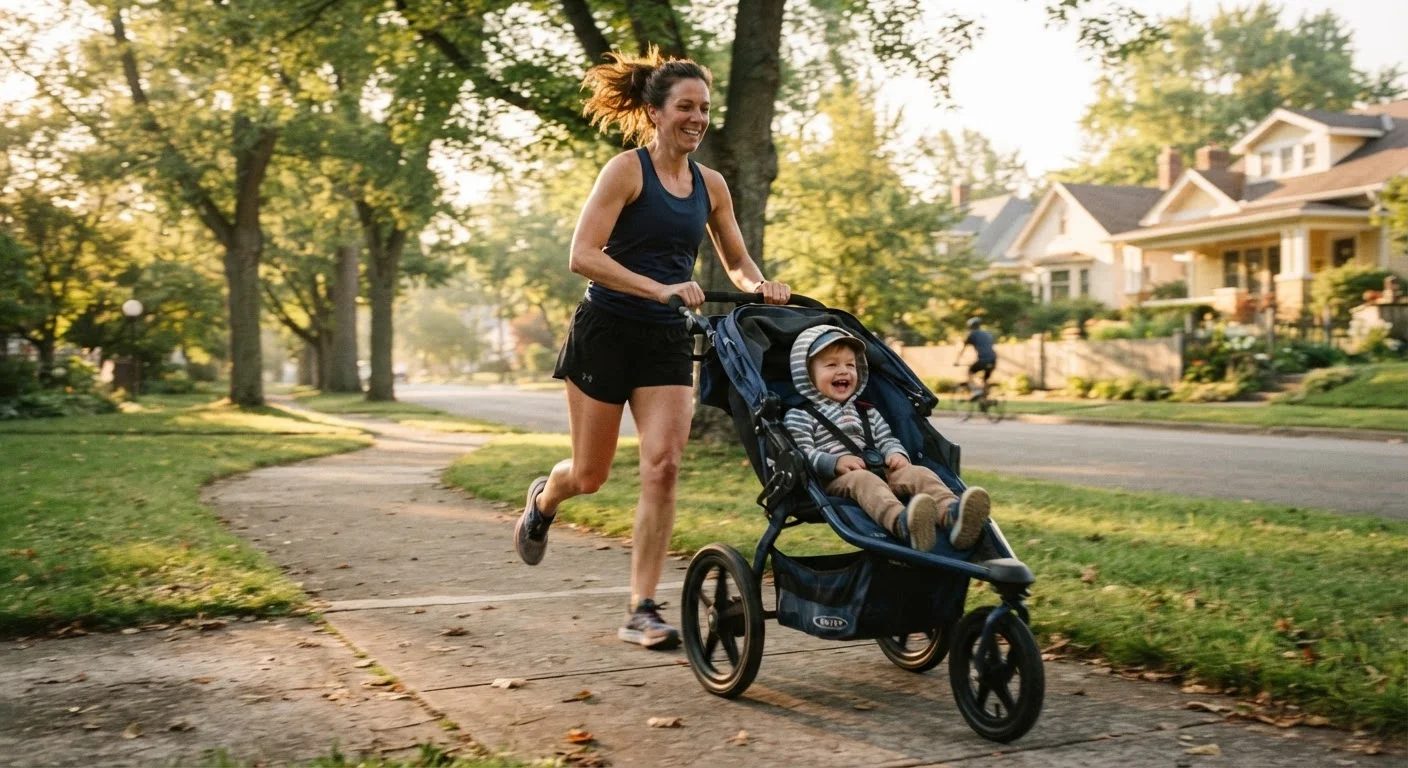
Involve children or other household members to turn activity into shared time rather than carved-out alone time.
For parents, finding solo workout time is often the hardest part. Reframing movement as family activity eliminates the trade-off between fitness and family presence. It also builds habits in children, which has its own long-term benefit.
Quick actions you can take today
Knowing what works is only useful if something actually changes. The actions below require no equipment, no membership, and no major schedule overhaul.
For families looking to build shared activity habits, a practical playbook for family fitness covers how to weave movement into everyday life using community resources and simple routines. If you want a more structured plan, building a weekly exercise routine from scratch offers a step-by-step framework that works with no prior experience and minimal equipment.
Making it stick without burning out
Consistency matters more than intensity, especially in the early weeks. Research on habit formation consistently shows that lower-effort behaviors are more likely to persist because they generate less resistance. A 15-minute walk done five days a week produces more cumulative benefit than an ambitious 90-minute session that happens once and then stops.
Rest is part of the equation too. Inadequate sleep raises perceived effort during exercise and reduces motivation. Evidence-based sleep habits can support recovery and make it easier to follow through on planned activity days. Similarly, chronic stress raises cortisol and often disrupts exercise routines. Managing stress in a busy household addresses how families can reduce that friction without adding more to their plates.
If you are weighing whether a gym membership fits your budget, a breakdown of home versus gym fitness can help you assess the practical trade-offs. Many of the practices in this article cost nothing and work in any setting. The broader Health hub has additional guidance on building wellness habits that work for cost-conscious families across multiple areas of daily life.