

Key Takeaways
- Short, consistent workouts can produce real fitness gains without long gym sessions.
- Soreness after exercise is not a reliable indicator of workout effectiveness.
- Bodyweight training done progressively can build genuine strength at no cost.
- Spot-reducing fat in one body area through targeted exercises is not physiologically possible.
- Age does not disqualify anyone from starting a fitness routine safely.
Why myths about fitness stick around
Fitness misinformation spreads because it sounds plausible and often flatters what people already want to believe: that getting fit is either impossibly complicated or requires resources most families do not have. Neither is true, but both beliefs are effective at keeping people from starting.
This article examines the most common misconceptions and what exercise science actually supports. None of it is medical advice, and anyone with an existing health condition should check with a qualified healthcare provider before beginning a new exercise program.
Myth
You need at least an hour of exercise to make it worthwhile.
Fact
Research supports meaningful cardiovascular and strength benefits from sessions as short as 20 to 30 minutes, provided effort and consistency are present.
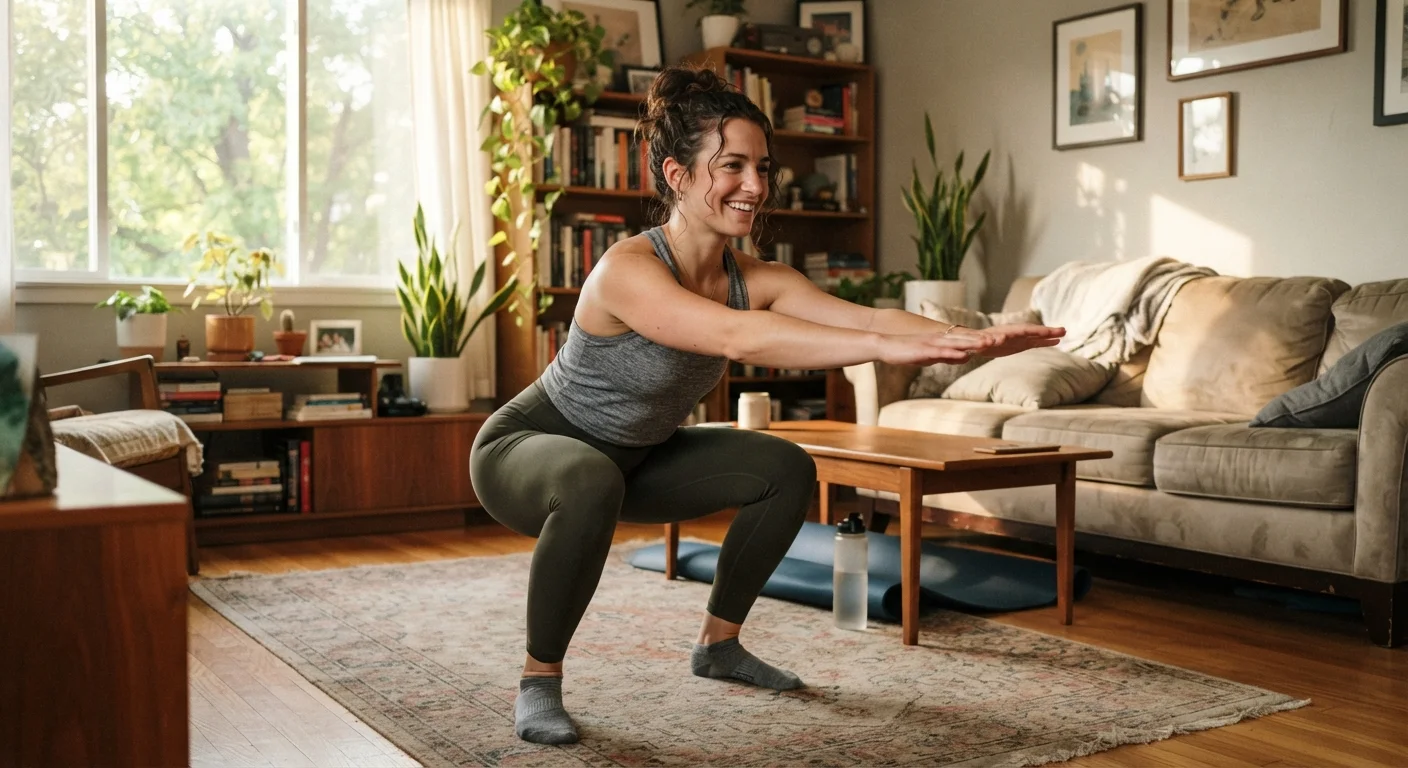
The American College of Sports Medicine recommends at least 150 minutes of moderate-intensity aerobic activity per week for most adults. That breaks down to roughly 30 minutes on five days, not one long daily session. Shorter, more frequent workouts are not a compromise; for many people they are actually easier to maintain because they fit around work and family schedules. Bodyweight circuits can cover both strength and cardiovascular demand in under 30 minutes with no equipment.
Myth
If you are not sore the next day, the workout did not do anything.
Fact
Delayed onset muscle soreness (DOMS) reflects novelty and mechanical stress, not workout quality. Absence of soreness does not mean the session was ineffective.
DOMS occurs when muscles encounter movements or loads they are not yet adapted to. As fitness improves, the same workouts produce less soreness because the body has adapted. Chasing soreness as a goal can lead to overtraining, poor recovery, and injury. A more reliable signal of progress is whether you can do more work over time, which is the basis of progressive overload.
Myth
Bodyweight training is only for beginners and cannot build real strength.
Fact
Bodyweight exercises, when applied progressively, can build significant strength and muscle in the same way that weighted exercises do.
Muscle tissue responds to mechanical tension and progressive challenge, regardless of whether that challenge comes from added weight or more difficult movement variations. A push-up progressed from a standard version to a decline push-up to a single-arm variation represents genuine progressive overload. Gymnasts, who train almost entirely with bodyweight, demonstrate that this approach can produce advanced strength. Home training and gym training each have trade-offs, but bodyweight work is not inherently inferior.
Myth
Doing crunches and sit-ups will reduce belly fat.
Fact
Spot reduction, the idea that exercising a specific muscle burns fat in that area, is not supported by the evidence. Fat loss happens across the whole body.
When the body burns stored fat for energy, it draws from fat stores throughout the body, not specifically from the muscle being worked. Core exercises do strengthen the abdominal muscles and improve posture and stability, which are worthwhile goals. But visible changes in body composition come from overall activity levels and nutrition patterns over time, not from any single targeted exercise.
Myth
It is too late to start exercising once you are past 50 or 60.
Fact
The body responds to exercise training at any age. Adults who begin exercising later in life show measurable improvements in strength, cardiovascular health, and functional mobility.
Research published in journals including the Journal of Physiology has documented muscle protein synthesis and strength gains in older adults following resistance training. The starting point may differ, and any new program should account for existing health conditions with guidance from a healthcare provider, but age alone does not block adaptation. A readiness checklist can help older adults assess where to begin safely.
Myth
Cardio is the only exercise that matters for health.
Fact
Both aerobic exercise and resistance training independently contribute to health outcomes. Current guidelines recommend combining both types.
Cardiovascular exercise supports heart health, endurance, and metabolic function. Resistance training supports bone density, muscle mass, joint health, and metabolic rate. The two are complementary, not competing. A well-rounded routine includes both, and bodyweight exercises can satisfy the resistance component without any equipment or gym access.
What this means for building your routine
Clearing away these myths leaves a more workable picture. You do not need hours, a gym membership, or expensive equipment to make consistent progress. Squats, push-ups, lunges, and walking are free. A 20-to-30-minute session three or four days a week is a realistic starting point for most adults, and structuring that schedule does not have to be complicated.
Consistency over time matters far more than any single workout's intensity. Early drop-off is common, and it tends to happen when the plan is too ambitious, not too gentle. Starting small and building gradually is what the research on habit formation supports.
Families working with tight schedules can also treat everyday movement, a walk after dinner, shooting hoops at a public park, a bodyweight circuit in the living room, as legitimate training. Weaving activity into daily life produces results that isolated gym visits sometimes do not, because frequency and consistency compound over weeks and months.
No-cost tools and community spaces can support this further. Libraries, public parks, and free video platforms carry enough structured programming to keep workouts varied without spending anything.
This article is for informational purposes only and is not medical advice. Consult a qualified healthcare professional before starting any new exercise program, especially if you have an existing health condition.