

Key Takeaways
- Camping typically costs less per night than a budget hotel, but upfront gear costs can narrow that gap significantly.
- Budget hotels remove setup hassle and suit families with young children or those traveling in unpredictable weather.
- Camping works well for families already owning gear who prioritize outdoor experience over convenience.
- Hidden costs on both sides, including resort fees at hotels and firewood or camp store prices at campgrounds, affect the real total.
- Many families find a mixed approach, camping some nights and booking a hotel for others, delivers the best balance.
Our Verdict
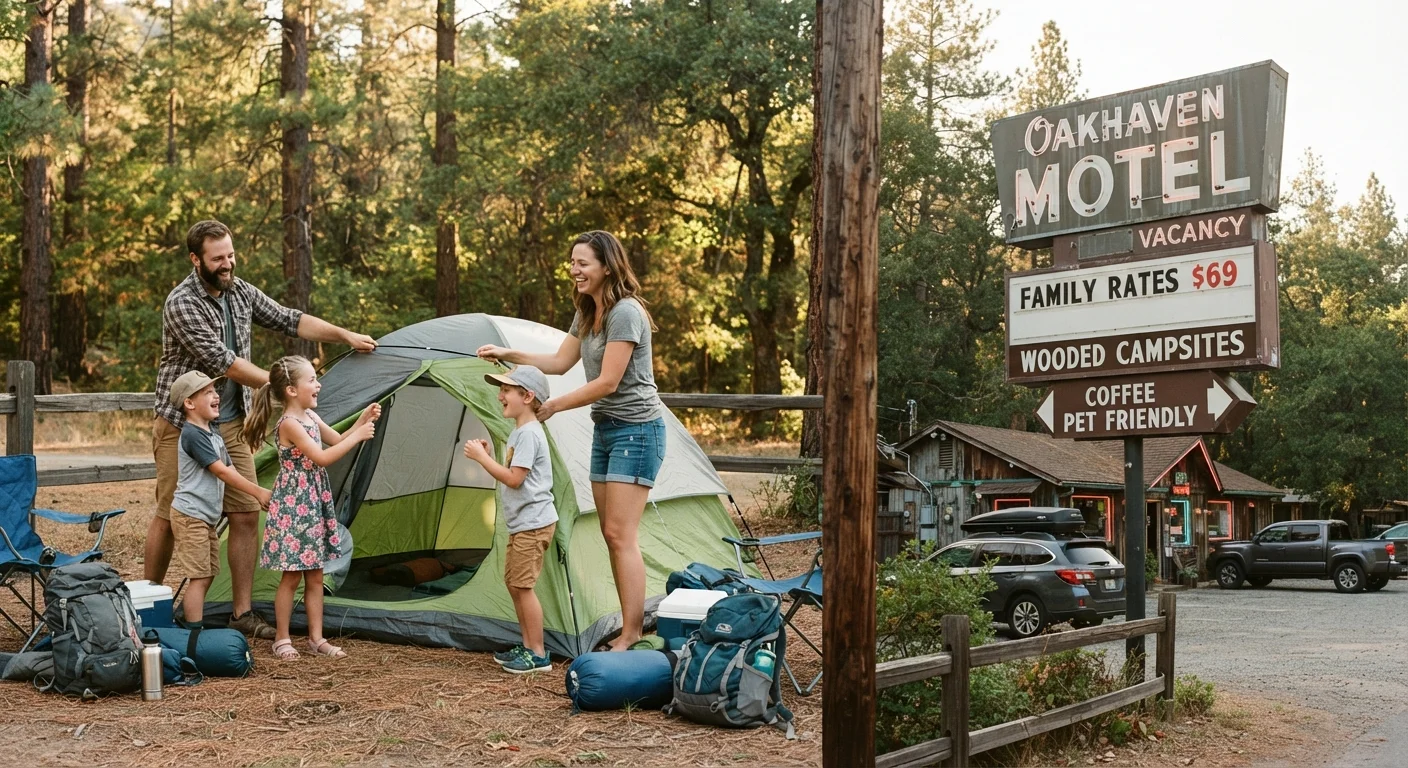
Neither camping nor budget hotels win outright for every family. Camping is the stronger financial choice for gear-equipped families on multi-night trips, while budget hotels are more practical for families with toddlers, tight timelines, or unpredictable weather. The most cost-effective trips often combine both.
| Best for | Recommended |
|---|---|
| Gear-equipped families on longer road trips | Camping |
| Families with very young children or infants | Budget hotels |
| Trips through areas with extreme heat, cold, or wet weather | Budget hotels |
| Budget-focused families comfortable with outdoor cooking and logistics | Camping |
The real cost breakdown
A campsite at a public campground in the US commonly runs $20 to $45 per night, with many national forest primitive sites free or under $10. A budget hotel room for a family of four tends to fall in the $80 to $130 range per night, depending on location and season. On paper, camping wins fast. A four-night trip could save a family $200 or more in lodging alone.
The catch is startup gear. A family that owns nothing yet, tent, sleeping bags, cooking equipment, cooler, will spend anywhere from $300 to $600 on basics before pitching a single stake. That investment pays off over multiple trips, but it makes a first camping trip more expensive than the nightly rate suggests. Families who already own gear carry essentially zero setup cost, which is where camping's financial advantage becomes clear.
Budget hotels carry their own hidden costs. Parking fees in urban areas, pet fees, and resort fees (charged even at roadside properties in some states) can add $15 to $40 per night onto the advertised rate. Check the full booking total, not just the headline price. See common hotel booking errors families miss for a fuller picture of where those costs sneak in.
| Camping | Budget hotels | |
|---|---|---|
| Average nightly cost | $0 to $45 per site | $80 to $130 per room |
| Upfront investment | $300 to $600 for new gear | None required |
| Setup time on arrival | 30 to 60 minutes | Under 10 minutes |
| Weather dependence | High, conditions directly affect comfort | None, climate controlled |
| Suitability for toddlers | Challenging, especially overnight | Easier with climate control and bathroom access |
| Meal costs | Lower with campfire cooking | Higher without in-room kitchen |
| Hidden fees risk | Camp store markups, firewood costs | Resort fees, parking, pet fees |
Comfort and practicality by age group
Camping with a toddler or infant is genuinely difficult. Nap schedules, temperature sensitivity, and nighttime restlessness make tent sleeping a stress multiplier for many parents. A hotel room with climate control, a bathroom steps away, and a crib rental from the front desk removes several logistical problems at once.
School-age children, roughly 5 to 12, tend to be camping's sweet spot. They can help with setup, sleep reasonably well in sleeping bags, and find the outdoor environment genuinely engaging. Teens often appreciate the independence of a campsite over a shared hotel room, particularly if the campsite has a fire and some space from parental supervision.
For adults, the comfort gap is real but manageable. A quality sleeping pad does most of the work that a hotel mattress does. The bigger practical difference is bathroom access: shared campground bathhouses range from clean and well-maintained at state parks to rough at busier commercial sites. Families who camp regularly learn quickly which park systems maintain their facilities.
Weather, location, and logistics
Weather is where camping's calculus shifts most sharply. A June camping trip in the Rocky Mountain foothills can drop to 40 degrees overnight, and rain turns a weekend into a misery test for unprepared families. Budget hotels eliminate weather risk entirely, which matters when traveling with children who do not adapt as flexibly to conditions.
Location also shapes the choice. Near national parks, campgrounds are often the only reasonably priced overnight option, since gateway towns frequently have hotel rates well above the budget range. In those cases, camping is less a lifestyle preference and more a practical necessity for families watching costs. The shoestring road trip planning guide covers how to map both campsite and hotel stops across a multi-day route.
Setup time matters on driving days. Arriving at a campsite at 7 p.m. after a seven-hour drive, then spending 45 minutes pitching a tent and cooking dinner, is a real load. A budget hotel lets a tired family check in, order a pizza nearby, and rest. Families who plan shorter driving days avoid this problem, but it requires scheduling flexibility not everyone has.
Book campsites early for peak season
Popular national and state park campgrounds fill months in advance for summer weekends. Recreation.gov and individual state park reservation systems typically open booking windows four to six months ahead. Families flexible on exact dates have a much easier time finding spots, and weekday nights almost always have better availability than Friday and Saturday.
Mixing both for the strongest value
Many families with experience doing both have landed on a hybrid approach. Camp near the destination where scenery and outdoor access justify the setup, then book a budget hotel for transit nights when the only goal is sleep and a shower before the next drive.
This structure also works well for longer trips where one or two hotel nights allow laundry, resupply, and genuine rest without fully committing to hotel pricing throughout. Budgeting $50 per night average across a mix of campsite and hotel stays is realistic for families who plan ahead.
Before committing to either approach for a full trip, running through a pre-trip checklist helps catch overlooked costs and logistics. A practical pre-trip checklist for families includes packing, document, and cost verification steps that apply whether you are sleeping in a tent or a double room. The families who stay on budget across multiple trips tend to build consistent planning habits rather than making case-by-case decisions under pressure. See habits consistent family travelers use for specifics on what those habits look like in practice.