

Key Takeaways
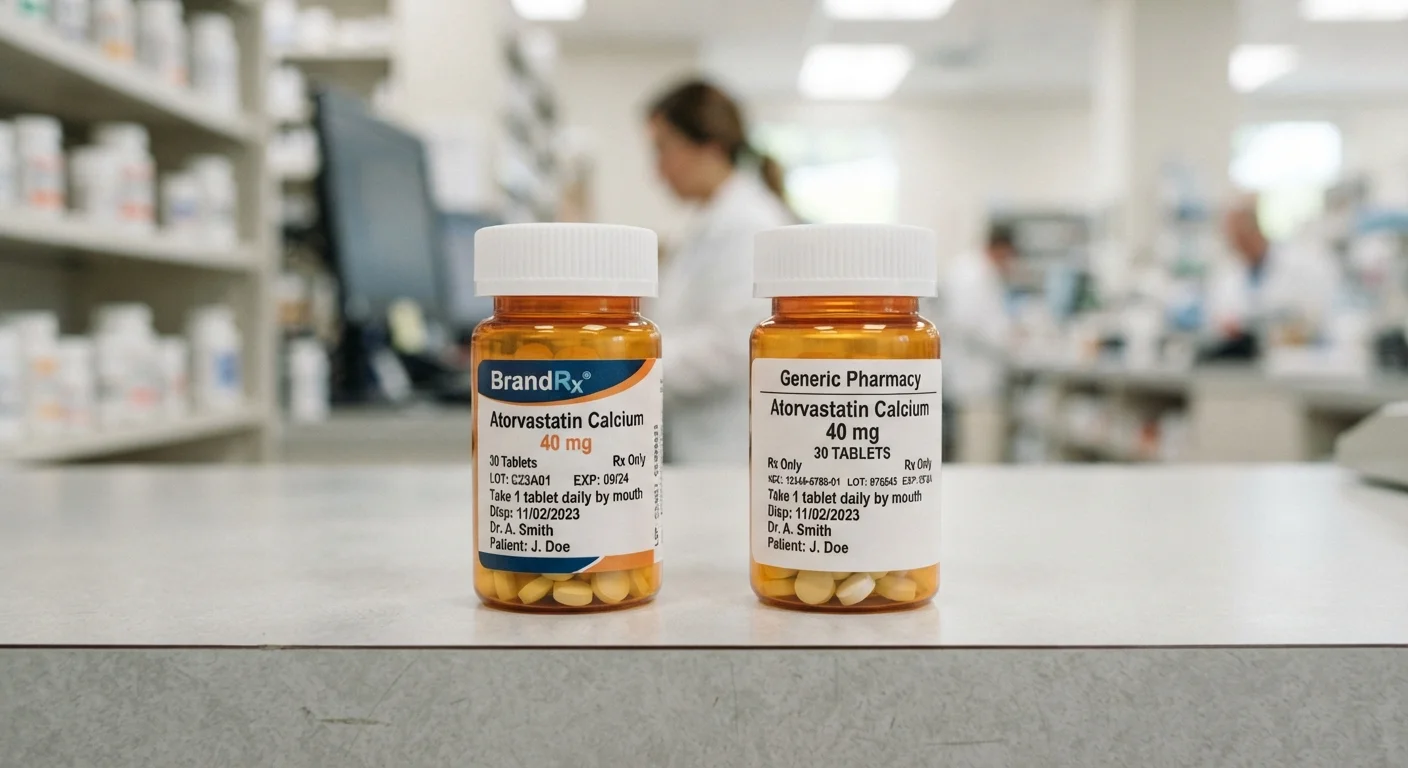
- Generic drugs contain the same active ingredient, strength, and dosage form as their brand-name counterparts.
- The FDA requires generics to demonstrate bioequivalence before approval, meaning they must work the same way in the body.
- Inactive ingredients can differ between generic and brand-name versions, which matters for people with certain allergies.
- Generic medications typically cost significantly less because manufacturers do not repeat the original clinical trials.
- Always consult your pharmacist or physician before switching formulations, especially for narrow therapeutic index drugs.
Option A
Brand-name medications
The original, patent-protected formulation.
Best for: Patients whose physician has a specific clinical reason to prescribe the original formulation, or those with sensitivities to certain inactive ingredients.
Option B
Generic medications
The lower-cost, FDA-equivalent alternative.
Best for: Families looking to manage prescription costs without compromising on the active ingredient or its established effectiveness.
If you want to reduce out-of-pocket prescription costs
Generic medications
Generics are regulated to the same active-ingredient standard and are priced substantially lower because manufacturers skip the original drug development costs.
If you have known allergies to specific dyes, fillers, or coatings
Brand-name medications
Inactive ingredients can differ between versions, so your physician or pharmacist can review the exact excipient list in the brand formulation to avoid a reaction.
If you take a narrow therapeutic index medication such as certain thyroid or seizure drugs
Brand-name medications
For drugs where small changes in blood concentration matter clinically, your prescriber may recommend staying with one consistent formulation; discuss the right choice with them.
If a generic version is not yet available for your medication
Brand-name medications
Patent protection prevents generic entry for a period after a drug launches; your pharmacist can tell you whether a generic is expected and when.
What makes a drug 'generic'
A generic medication is a drug product that contains the same active ingredient in the same amount, the same dosage form (tablet, capsule, liquid), and the same route of administration as the original brand-name product. The term 'generic' does not mean lower quality. It describes a drug made after the original manufacturer's patent expires, allowing other companies to produce it.
Before a generic can reach pharmacy shelves, the U.S. Food and Drug Administration (FDA) requires the manufacturer to submit an Abbreviated New Drug Application (ANDA). That application must prove bioequivalence: the generic must deliver the active ingredient into the bloodstream at a rate and extent that is statistically equivalent to the brand-name version. The FDA's standard allows no more than a 20% difference in either direction in absorption metrics, and in practice most approved generics fall within a much narrower range.
What generics do not have to replicate are inactive ingredients, also called excipients. These include binders, fillers, dyes, and coatings that give a pill its shape, color, and shelf life. This is where brand-name and generic versions most commonly diverge.
How the two compare across key criteria
The table below summarizes the main practical differences between brand-name and generic drugs. As you review it, keep in mind that 'difference' does not automatically mean 'worse'; context matters for each criterion.
| Criterion | Brand-name | Generic |
|---|---|---|
| Active ingredient | Original formulation | Identical to brand-name |
| Inactive ingredients | Proprietary excipients | May differ from brand |
| FDA approval standard | Full NDA with clinical trials | ANDA with bioequivalence data |
| Typical cost | Higher (patent protection) | Substantially lower |
| Appearance | Consistent shape and color | May look different |
| Availability | Available from launch | Available after patent expires |
One area worth pausing on is cost. Because a generic manufacturer does not conduct the original multi-phase clinical trials or pay for initial FDA approval of a new molecule, production costs are lower. Those savings pass through to the pharmacy counter. The FDA's own consumer information confirms that generics typically cost 80 to 85 percent less than their brand-name equivalents, though actual prices vary by insurer, pharmacy, and state. Just as price does not guarantee superiority in other consumer categories (price and quality do not always track together), a lower-cost generic is not inherently inferior to its brand-name version.
When the distinction matters most
For most common medications, the FDA's bioequivalence standard means a generic performs the same clinical job as the brand-name drug. However, a specific category of medications requires more careful consideration: drugs with a narrow therapeutic index (NTI). These are drugs where the difference between a therapeutic dose and a toxic dose is small. Examples include certain anticoagulants, antiepileptics, and thyroid hormones.
For NTI drugs, even a variation within the FDA's accepted range could theoretically affect some patients. Many physicians prefer patients on these drugs to stay with one consistent formulation, whether brand or generic, rather than switching back and forth. If you take an NTI medication, ask your prescriber directly whether consistency of formulation matters for your particular drug and dose.
Inactive ingredients are another legitimate consideration. A small number of patients are sensitive to specific dyes (such as FD&C Yellow No. 5, also known as tartrazine) or to lactose, gluten-derived fillers, or certain preservatives. Since inactive ingredients can differ, a patient who tolerates the brand version may react to a generic's formulation, or vice versa. Your pharmacist can access the full inactive ingredient list for any dispensed product.
This article is for general informational purposes only and is not a substitute for professional medical advice. Always consult a qualified healthcare provider before making changes to any medication regimen.
Questions to bring to your pharmacist
Your pharmacist is a free resource
In the United States, pharmacists are licensed healthcare professionals who can answer detailed questions about drug formulations, inactive ingredients, and cost-saving options. Most pharmacies offer consultations without an appointment. If you have a concern about switching between a brand-name and generic version of a medication, a five-minute conversation at the pharmacy counter is a practical first step before calling your physician's office.
Pharmacists are among the most accessible healthcare professionals for medication questions; no appointment is typically needed. When picking up a prescription, consider asking:
- Is a generic available for this medication, and does my insurance cover it?
- Are the inactive ingredients in this generic formulation different from the brand version I have taken before?
- Should I stay consistent with one manufacturer's generic for this particular drug?
- Are there any known interactions between this medication and others I currently take?
These conversations cost nothing and can help your family get the most from every prescription. Your pharmacist can also flag if a drug falls into the narrow therapeutic index category where your prescriber's guidance on formulation choice is especially worth seeking.